
When Christopher Kunzelman’s wife was diagnosed with multiple sclerosis, he asked her where she wanted to spend the last days of her life.
She chose Maui.
Kunzelman came from Scottsboro, Arizona, bought a house and prepared to move his family in, but he soon learned that he did not belong there. Locals warned him “this is a Hawaiian village. The only thing coming from the outside is the electricity,” and “you don’t even belong in Hawaii.”
While he was moving in the furniture, two men showed up. They told him, “You seem like a nice guy, but you’re the wrong color for this place.” When he didn’t get the message, one of the men told him, “your skin is the wrong f****** color.” and hit him on the back of the head with a shovel.
The Polynesian islanders beat him with the shovel, punched him, and kicked him in the ribs while he lay unconscious. They told him, “No white man is ever going to live here.”
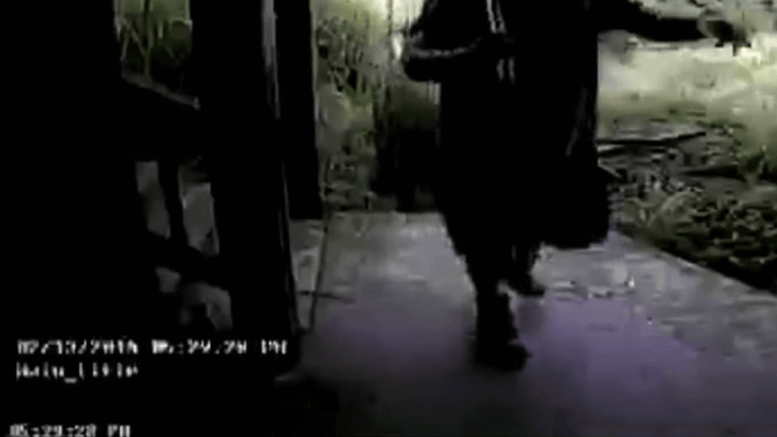
Kunzelman regained consciousness and made his escape while the two men were discussing how to kill him and his uncle. But when he made it to the hospital, the police refused to do anything even though he had severe injuries and had recorded part of the incident on video.
Meanwhile one of the attackers went out and assaulted another white man.
The Maui attackers had told Kunzelman, “We’re the law, we’re the police, the police have our backs, we’re the ones who make the laws, we’re the ones who enforce the laws, we’re the judge in Kahakuloa, and we’re the ones who decide if you live or die.”
And it seemed they were right. The Kunzelmans were never able to sell the house because it wasn’t safe to live there.
When the men were finally arrested, they got off with probation while Kunzelman lost vision in one eye. That was in 2014. The hate crime victim never stopped campaigning for justice and federal charges were finally brought and the men were sentenced to prison in March 2023.
Had the races in the Maui assault been reversed, we would have all heard about it. Not only did we not hear about it, but local leftist activists and the media rallied in support of the attackers.
An Associated Press article claimed that two racist thugs beating a man and planning to kill him reflects “Hawaii’s nuanced and complicated relationship with race.”
That’s not how attacks on black people moving into white neighborhoods were described.
Hawaii Public Radio, an NPR member, provided “context” and “complex history” for the case. A Hawaiian language professor blamed white colonialism, called the vicious assault a “clash of cultural values”, and worried that ‘Haole’, the slur that the Polynesian attackers had used, would make them “fearful of expressing ourselves using our own language in our own homeland”.
Another leftist professor claimed that ‘Haole’ is a legitimate slur because it names “colonial settler whiteness” and that the assault should be ignored because the real problem was “settler colonialism”. The article contained no quotes from the victim. Not even his name.
Hawaii Maui College hosted an event defending the vicious racist attackers in which a leftist activist complained that, “these young men had already been pled guilty in the state system, but that wasn’t good enough. They’re being used as scapegoats for the white culture to teach everybody else a lesson.”
The Kunzelman case can help us understand what happened before and after the Maui fires.
What looks like incompetence by government officials really reflects an ongoing racial conflict. Leftist activists, most of them white or black, have organized some activist Polynesian residents (often wrongly referred to as native Hawaiians) along the American Indian or Australian aboriginal model into their own system with extensive leverage over the bureaucracy.
Ongoing conflicts over water rights between plantations and so-called ‘native cultivation” led to a denial of water to fight the fires. The widely reported denial of water by M. Kaleo Manuel, the deputy director of the Hawaii Commission on Water Resource Management, to fight the fires led to national outrage, but local pro-Polynesian activists and the media rallied to his defense since what he was really defending was ‘native cultivation’ against the sugar cane plantations.
Even with the wildfires going on, the Hawaii Supreme Court rejected a petition from the state government to free up water to fight the fires. The state was not allowed to divert water from that being wasted for “customary Hawaiian practices and ecological balance”.
The court ruled that the state government had not shown a “clear and indisputable right to the relief requested” that being the use of the water needed to put out the fires instead of using it to inefficiently grow the ‘Taro’ plant: an Asian root vegetable that we are told by activists is specially sacred to Hawaii even though it’s grown and eaten all over Asia and even Africa.
Taro requires a lot of fresh flowing water, especially when grown the ‘native’ way, and ‘traditional methods’ ignore all the accomplishments of modern agriculture to grow it in the most wasteful way possible. Taro plants suffer from innumerable diseases while the ‘native’ approach is to ignore modern cross-breeding methods that would make the crops more resilient.
Nigeria grows and exports Taro around the world, while Hawaii’s ‘native agriculture’ is so hopeless that the state has to import 2 million pounds of its ‘sacred vegetable.’ If you visit Hawaii, the Taro you eat could very well be coming from Nigeria or China. But growing Taro the traditional way isn’t about functional agriculture, but striking a blow against the plantations.
And denying the plantations the water they needed to fight fires, like the Kunzelman assault, was about striking a blow against the hated ‘Haoles’ who colonized the land after the Polynesians had originally colonized it by enslaving the original inhabitants, tattooing their heads and then using them as human sacrifices while making Captain Cook look like a saint.
Growing Taro the ‘native way’ was more important than fighting fires and saving lives. Local activists have shown little interest in the wildfires which may have claimed hundreds of lives, but view the fires as a colonialist conspiracy to take away water rights from a bureaucracy of “indigenous” activists. ‘Native rights’ matter much more than fighting wildfires or human life.
The ‘missteps’ that killed people, from failing to sound the sirens to setting up a barricade that blocked drivers trying to escape the fires, are typical of an insular society where things are often done informally and outsider ‘Haoles’ are deliberately denied the information they need unless they have lived there long enough to cultivate relationships and get a feel for what is going on.
Much of Hawaii operates by third world rules that subvert American norms. Corrupt cronyism is ubiquitous. Rules, including safety regulations, are only honored in the breach. And resentment toward mainlanders, while not universal, is enough of a factor that the perpetrators of the Kunzelman assault could not only expect to get away with it, but they nearly did.
What role did all of those factors play in the record wildfire deaths? The answer is some. It will be very hard to separate disdain from malice, an obsession with maintaining a racial power struggle even during a crisis, a disregard for outsiders that under normal circumstances might be merely inconvenient but in this case proved fatal, and line up a specific body count.
But what happened is what leftists in America call “systemic racism”.
The system in Hawaii, while often headed by Americans, is handicapped by a significant presence of ‘indigenous’ activists who may be merely neglectful or actively hostile. And there’s little question that some people of all races died because of the systemic racism of a setup that treated outsiders as despised interlopers and used informal, rather than formal, systems.
After the wildfires, the battle over land and water will continue to be fought between leftist groups like the Sierra Club and its Polynesian activist allies, and everyone else. Hawaii’s original Polynesian colonists are not villains in this. Most of them simply want to live their lives. Like minority communities in America, leftists have recruited ugly, racist and radical elements from among them and weaponized them to seize power and wreck their share of the country.
The Maui wildfires, like the aftermath of disasters in Puerto Rico or the misery in urban inner cities in America, reflect an inculcated culture of systemic racism, victimhood and dysfunction.
The damage from the wildfires will heal, but the underlying crisis of Hawaii will continue.
A decade ago, Christopher Kunzelman was told that, “no white man is ever going to live here.” Hawaiian activists worsened the impact of the wildfires to make sure that “no white man is ever going to live” in a much broader swath of Hawaii than just one house in one village.