
What November Will Write Into Virginia’s Bill of Rights — and Why the Pulpit Is the Only Voice That Can Stop It
I write this as one watchman to another, and I will not soften it, because the hour does not allow it.
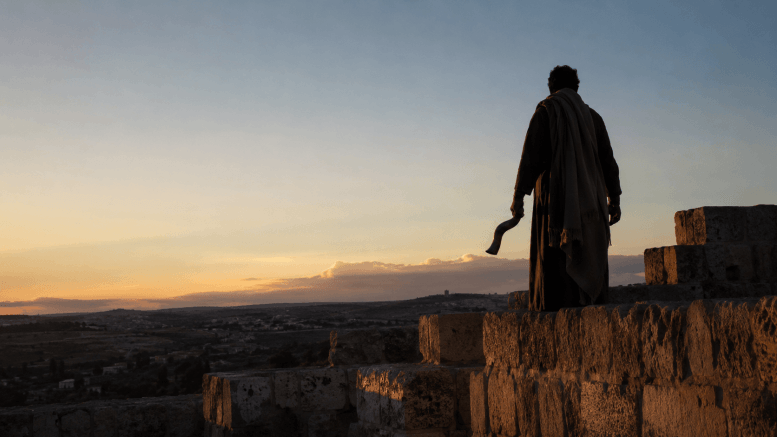
God gave Ezekiel his post before He gave him a single sermon. “So you, son of man, I have made a watchman for the house of Israel” (Ezekiel 33:7, ESV). And He bound a hard condition to the office: “If the watchman sees the sword coming and does not blow the trumpet, and the people are not warned… their blood I will require at the watchman’s hand” (Ezekiel 33:6, ESV). Read it slowly. The watchman is not judged for whether the city stands or falls. He is judged for one thing only — whether he blew the trumpet. Silence is not caution. It is the very sin the verse was written to name.
So here is the sword. I have seen it. I am blowing the trumpet, and I am asking you to pick up yours.
The Sword on the Horizon
On November 3, Virginians will vote on three amendments to the Bill of Rights of our Commonwealth’s constitution. Two of them strike directly at walls God built before He built a nation.
The first would rewrite Section 15-A to remove marriage as the union of one man and one woman and replace it with a genderless “right to marry.” That is the wall raised in the garden: “Therefore a man shall leave his father and his mother and hold fast to his wife, and they shall become one flesh” (Genesis 2:24, ESV) — the verse Christ Himself reached back to as settled from the beginning (Matthew 19:4–6).
The second would write into the Bill of Rights a sweeping right to abortion, set behind a legal standard so high that few meaningful limits could survive it. That strikes the wall around the image-bearer: “For you formed my inward parts; you knitted me together in my mother’s womb” (Psalm 139:13, ESV). The God who knits a life in the womb does not hand us a constitutional right to unmake it.
These are not policy footnotes. They are the marriage wall and the life wall, proposed for demolition by public vote, on a single day.
Why This Time Is Different — and You Must Say So
Here is what your people do not yet understand, and what you must tell them from the front.
This is not an ordinary law that a court can later undo. This past spring, the same legislative majority rushed a redistricting amendment onto a special-election ballot, spent a fortune, and watched it pass — and then the Virginia Supreme Court struck it down, because in their hurry they had cut a procedural corner. A judge cleaned up the mess after the fact.
No judge is coming this time. These three amendments did not cut the corner. They passed the General Assembly twice, in two separate sessions, with an election in between — exactly as the constitution requires. The lawful process is finished. Once the people vote yes, the words become part of the constitution itself, and a state court cannot strike down the constitution for violating the constitution. There is no appeal. There is no morning-after ruling waiting to save us. The vote on November 3 is the last word, and it is meant to be permanent.
That is why a sermon in December is a eulogy. The trumpet has to sound now.
The Sword Is Not Only Out There
I have to say the hard thing, because a watchman who flatters his fellow watchmen is no watchman at all.
The gravest threat to these walls is not the activist who wrote the amendment. He is doing exactly what he believes is right. The graver threat is the shepherd who sees the sword, knows the truth, and keeps the trumpet in the closet because the subject is uncomfortable and the congregation is nervous.
God has a name for that shepherd, and it is not a gentle one. “His watchmen are blind… they are dumb dogs, they cannot bark; sleeping, lying down, loving to slumber” (Isaiah 56:10, KJV). A dog that will not bark when the thief is already at the gate is not kind. He is useless to the house he was set to guard. And Paul adds that even when the trumpet does sound, it must sound clearly: “if the trumpet give an uncertain sound, who shall prepare himself to the battle?” (1 Corinthians 14:8, KJV). A muffled, hedged, half-apologetic word from the pulpit will muster no one.
Pastor, your people will not move on what you will not name.
Let Me Be Fair
I owe the other side an honest hearing, and so do you. The Virginians championing these amendments will tell you they are securing love, dignity, and equal protection for their neighbors — and many of them believe it with their whole hearts. That sincerity is real, and we cheapen ourselves if we pretend otherwise.
But sincerity was never the question. The question is whether a wall God built into the created order can be voted out of a Bill of Rights by a sincere majority — and whether the church will say so before the vote, or only mourn afterward. We answer the people in love. We do not surrender the wall to do it.
Nineveh Is the Reason to Blow It
If you have already decided the warning is hopeless, remember the most reluctant preacher in all of Scripture. Jonah walked into Nineveh with eight words of doom and not a syllable of gospel in them — and the city repented, and God relented from the judgment He had announced. The trumpet worked.
That is the entire reason to sound it. If no warning ever turned anything, the watchman would be a fool shouting at a wall. But Nineveh stands as proof that a warned people can still turn, and that a just God still answers those who turn. November is not yet decided. That is exactly why silence now is not an option — and why despair is simply disobedience wearing a humble face.
What I Am Asking You to Do
I am not telling you how the trumpet must sound. The manner is yours to discern before God, and faithful shepherds will sound it differently. I am telling you that it must sound. Scripture commands the watchman to warn; it leaves the wording to the watchman. What it never grants him is the option of silence.
Do not make this one Sunday. Make it a season. Name it from your pulpit in July — and then keep naming it. In August, in September, in October, until the last ballot is cast. Preach it once, yes; but also put it in the bulletin, in the announcements, in the email blast, in the small groups, on the church app. The other side did not win the culture with a single message politely delivered once. They won it by repetition, through every channel they had, until it became the air people breathed. Repetition from the pulpit is not nagging — it is the stewardship of an alarm.
See that your people are registered, and see that they show up. Tell them plainly that a Christian’s vote on these two walls is an act of stewardship, not partisanship. If the word politics is the very thing that makes them flinch, point them first to our Editorial Board’s companion piece, The Word the Enemy Stole, which clears that ground and shows why the Bible is the most political book on the planet. And if you will not keep silent, add your name to this letter and blow it from your own pulpit — so that it is no longer one watchman calling, but a wall of them.
This call goes to the pastors first, because the trumpet is yours to sound. But it goes just as surely to every believer who will stand: add your name, place this in your shepherd’s hands, and ask him the one question that matters — will you blow the trumpet, or keep it in the closet?
The Line Still Hangs
I am not predicting defeat, and I refuse to. The God who set the plumb line in Amos’s hand has not moved it, and He has never once lost a battle in the history of the world. Our task is smaller than victory and larger than comfort: to be found faithful — to have blown the trumpet while the sword was still on the horizon and the city could still turn.
No argument on this page will change a single heart, and no warning ever saved a soul — only the Spirit who raised Christ from the dead can do that. But the same God who knit the image-bearer in the womb, and joined the first man and woman into one flesh, can still wake a sleeping church and make a crooked Commonwealth straight. He has done it before. Blow the trumpet, and leave the rest to Him.
Read It for Yourself
- The marriage amendment, HJ3 (Section 15-A): lis.virginia.gov/bill-details/20261/HJ3
- The abortion amendment, HJ1 (Section 11-A): lis.virginia.gov/bill-details/20261/HJ1
- Virginia Department of Elections — official voter explanations: elections.virginia.gov/election-law/referenda
- Ballotpedia — full text, vote tallies, and arguments on both sides: reproductive-freedom amendment and the marriage amendment pages.
- Companion piece (VCA Editorial Board) — why “politics” belongs in the pulpit: The Word the Enemy Stole.
Unless otherwise noted, Scripture quotations are from the English Standard Version (ESV). Isaiah 56:10 and 1 Corinthians 14:8 are quoted from the King James Version (KJV).

The U.S. Media needs to heed the story of Ananias and Sapphira in the book of Acts (Acts 5). They conspired to deceive the Church and were struck dead. How would we interpret journalists dropping dead mid-broadcast.
Please add projectjosiah and America’s Black Robe Regiment to lists of affiliate organizations
https://brrusa.org/project_josiah/
https://brrusa.org