By Ben Bartee | The Daily Bell
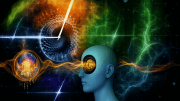
Mind control is the final frontier of the technocratic revolution. What you say, do, buy, and sell is increasingly trackable through technology. Yet, so far, the human mind remains a sanctuary free from prying foreign eyes – the last refuge.
This will not last if the technocrats have their way.
“Can you imagine that in ten years when we are sitting here we have an implant in our brains and I can immediately feel… because you all will have implants [gesturing to audience], I can measure your brain waves,” cartoon James Bond villain Klaus Shwaub giddily introduced the prospect of shared consciousness at Davos.
Duke University Professor Nita Farahany, also at Davos, surveyed the current state of mind-monitoring technology. Click on the links and watch
The World Economic Forum (WEF) is very interested in monitoring our thoughts. – “Imagine a world of total transparency, where every thought you think is visible to everyone else,” they eagerly state. – Duke University Professor Nita Farahany 2023. pic.twitter.com/7aTKqz9sCX
— SikhForTruth (@SikhForTruth) January 25, 2023
The World Economic Forum (WEF) is very interested in monitoring our thoughts. – “Imagine a world of total transparency, where every thought you think is visible to everyone else,” they eagerly state. – Duke University Professor Nita Farahany 2023. pic.twitter.com/7aTKqz9sCX
— SikhForTruth (@SikhForTruth) January 25, 2023
Nita Farahany, Professor at Duke University talks about “the coming age of wearable neurotechnology” where your ear pods monitor your brainwave activity “all day every day” to “track brain health” #wef23
What could possibly go wrong here… pic.twitter.com/zdkFpthqIF
— Andreas Wailzer (@Andreas_Wailzer) January 20, 2023
(1/2) Nita Farahany, Professor at Duke University, discusses if employers and insurance companies should have access to data about “genetic predictions” of people’s future health.
NO! and that should not even be a question#WEF23 pic.twitter.com/BaTXbqyt4t
— Andreas Wailzer (@Andreas_Wailzer) January 20, 2023
Likely, the technology is actually further along than publicly acknowledged, as the technocrats tend to roll out controversial advances incrementally to slowly acclimate the slaves to their new reality.
Note the apparent lack of any hesitation on the part of Farahany, Schwab, or any of these WEF technocrats to these novel technologies. Normal people (who don’t crave total control) don’t casually discuss monitoring every human’s brain activity 24/7/365 with no acknowledgment of the obvious risks of abuse. The only logical conclusion here is that there is something fundamentally broken in their psychological/spiritual makeup that allows them to decouple their normal human intuition from their work advancing The Science™.
Farahany’s WEF talk featured a short accompanying narrated animation to help digest what unrelenting surveillance of the mind might mean for everyday life.
The story centers around a fictitious dystopian techno-hell office in which the victim’s boss monitors her brain activity to make sure she’s doing her work and not fantasizing about sex with her coworker, “given the policy against intra-office romance.”
Government agents later show up at the protagonist’s workplace, commandeer every office worker’s brain activity, and cull through it indiscriminately to look for “synchronized brain activity” between co-workers to see who was thinking what illegal thoughts.
Dystopian prophet George Orwell, brilliant though he was, did not have the same vision as his contemporary Aldous Huxley did in the context of tech’s facilitation of tyranny. Orwell understood power brilliantly but not necessarily how the state would implement technology to underwrite its power.
Huxley, on the other hand, was plugged into the transhumanist, technocratic elite which even in the early 20th century had ambitions of total domination of humanity – not just physical control, but psychological as well.
Rather than Orwell’s infamous nightmarish “boot stamping on a human face forever” prophecy, the future of enslavement will more closely mirror Huxley’s vision in Brave New World, in which the state uses various technological and pharmacological implements to cull and pacify the population, so that physical force becomes unnecessary to maintain control.
In fact, in 1949, Huxley, after reading 1984, penned a little-known letter to Orwell, explicating their analytical differences in their respective novels:
“Within the next generation I believe that the world’s rulers will discover that… the lust for power can be just as completely satisfied by suggesting people into loving their servitude as by flogging and kicking them into obedience.”
This is impressive foresight for a man writing in the pre-internet era, when the pharmaceutical industry was still in its infancy.
The tyrants of tomorrow won’t appear in gaudy military attire; they’ll be the kind of soft-spoken HR administrator whose inflections trends upward at the end of her sentences as if her commands are just questions– in other words, totally non-threatening.
The technocracy’s footsoldiers won’t goosestep in orchestrated shows of force as an intimidation tactic; they’ll coo their charges into submission like a mother singing an infant to sleep with a lullaby. Without firing a bullet or dropping a bomb, they’ll infiltrate and subvert the human mind with drugs and irremovable implants.
Humans are conditioned by millions of years of evolution to respond with commensurate force to clear physical threats like armed goons rolling through their community. We are considerably less vigilant about insidious threats that do not rely on brute force but rather subtle psychological manipulation and unseen control mechanisms.
Ben Bartee is an independent Bangkok-based American journalist with opposable thumbs. Follow his stuff via Armageddon Prose and/or Substack, Locals, Gab, and Twitter.
Insta-tip jar and Bitcoin public address: bc1qvq4hgnx3eu09e0m2kk5uanxnm8ljfmpefwhawv