
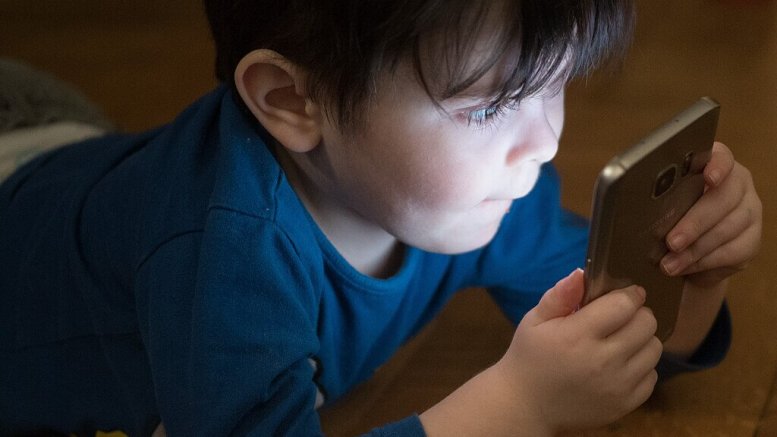
In today’s digitally saturated world, the psychological risks associated with excessive smartphone use are becoming increasingly apparent. Sarah Holliday of The Washington Stand delves into the growing movement among parents and schools to limit children’s exposure to digital devices and social media. Highlighting successful initiatives, expert insights, and real-life parental strategies, Holliday emphasizes the urgent need to reassess our relationship with technology for the sake of our children’s well-being. (Editor’s note: subtitles added, text unchanged)
A Growing Global Movement of Parents Is Keeping Their Kids Free from Smartphones
Sarah Holliday | The Washington Stand
Distancing from Technology
As numerous studies outline the psychological dangers of smartphone use and with the U.S. surgeon general calling for warning labels on social media, it seems many have chosen to distance themselves from the technological universe. If nothing else, at least many have chosen to limit the amount of time children spend engaging online. A recent example of this is Maple Grove Middle School in Minnesota, who chose to restrict the use of cell phones in the school.
Positive Results from Restricting Phone Use
This experiment kicked off roughly two years ago, and the results were reportedly “night and day,” with kids being happier, engaging with each other more often, paying better attention throughout the day, and showing increased participation in class discussions. Overall, the Minnesota middle school had overwhelmingly positive results, and considering that social media has proven to expose many children to pornography, sexual predators, and bullying, it easy to see why.
Global Movement for Smartphone-Free Childhood
In fact, Smartphone Free Childhood (SFC), a U.K. organization, has helped support a global movement of “parents who are refraining from giving their kids” phones. Reportedly, SFC created group chats to connect parents across England, and within a few short weeks, over 60,000 members had joined. According to SFC, the movement that has developed started accidentally. As written on their website, after some group chats on WhatsApp had spontaneously formed, “It soon became apparent that thousands — probably millions — of parents were desperate for something to change.” This, then, led to the founding of SFC, and “the response has been nothing short of remarkable.”
The Growing Concerns of a Phone-Based Childhood
In response to SFC’s momentum, Dr. Jonathan Haidt, an author and psychologist who’s prominently spoken on these matters, said SFC’s movement is “the beginning of the global tipping point in the fight back against a phone-based childhood.” And a “phone-based” childhood is truly what we’re dealing with. According to a study The Washington Stand analyzed from December 2023, “[M]ore teens have become desensitized to the value of their parents and turn to social media to learn ‘life lessons’ instead.” Increasingly, children are getting their news and beliefs from what they see on social media. Additionally, countless teens and pre-teens are forming entire “social” groups exclusively online. The sights are designed to be addictive, and they are proving to be.
Insights from Parents on Social Media and Phone Use
To gain further insight into what parents are saying, TWS conducted a series of interviews with parents and soon-to-be parents on what their views of social media and phone use are. Raina Earls, a Christian mother of five, shared her strategy. “In our family, young children do not have smartphones.” Concerning her teenagers, “We generally give [them] a phone so that they have a way to call us when they are home alone or once they start working and we want to stay connected.” But ultimately, “They don’t ever have a phone that they are free to roam and explore because that is asking them to make mature and wise decisions that they are not ready to make.”
Teaching Children About Social Media’s Impact
She noted that she and her husband have helped her children understand “from an early age that social media is not something to play with,” and they “talk candidly as often as possible about how social media has affected” society. Raina emphasized, “We understand that some good things have come from social media, but far more often there is a negative impact on individuals who do not use it wisely.” She also highlighted that her choices have proven fruitful “because they cannot bury themselves in a virtual world.” Instead, their house is full of conversation that this mother believes will help her kids “continue to navigate problems in the future.”
Parental Concerns Over Online Threats
Raina did express concern over the statistics of online threats, but she urged, “With predators like these on social media, all parents should be more than concerned.” But in terms of encouragement, she stated, “God is in control and knows all about social media. In fact, He is more aware of what is going on there than any one person.” As such, Raina and her family “don’t fear social media,” but seek “to use it wisely, which sometimes means not at all.” Even if parents make the “wrong decision,” she added, “we go back and correct it … [giving] us the opportunity as parents to model repentance, seeking forgiveness, and that we are willing in humility to make things right.”
Different Approaches in Split Households
Another mom, who asked to remain anonymous, has four kids and one on the way. Her approach to smartphones is that “children don’t need” them — at least not the advanced ones. “If a child is going to have a ‘smartphone,’” she added, “there are a growing number of options where parents can have total control over their kid’s phone, such as a Gabb phone or Pinwheel. In this day and age, I can understand the need to have a way to communicate with your school age child, but they certainly don’t need a device that gives them access to social media, the ability to text strangers, or to keep secrets.”
Real-Life Consequences of Smartphone Use
As someone whose children are a part of a “split household,” her stepsons frequent their other parent’s home, where there is a different approach to phones and social media. “Watching my stepkids have smart phones with unlimited access, despite our wishes and best efforts, is largely what fuels my philosophy for my own kids to not have phones and social media at a young age,” she said.
For this mom, her greatest fears have already become a reality. “My biggest concerns are my kids being exposed to pornography and being approached by strangers, which has already happened with my stepkids.” They were only barely 8 years old, and just one exposure led to a flood of secrets, addiction, and “a myriad of negative behaviors and challenges.”
Expert Advice for Christian Parents
David Closson, Family Research Council’s biblical worldview expert, gave his insight to how Christian parents can discern whether or not to allow their children to have smartphones or use social media. “In my view,” he said “I think parents, and especially Christian parents, need to be aware of how smartphones represent an existential crisis for their children.” He continued, “Giving young children unfiltered, unregulated access to the internet is perhaps the most unwise decision a parent can make. In fact, if you want your children to be brainwashed by the secular forces in our culture, hand them a smartphone.”
The Dangers of Social Media
More specifically, Closson emphasized that “social media has become a breeding ground for dangerous ideologies.” Even social media companies “their own research tells us that, especially for young girls, social media is a dangerous place.” As a soon-to-be father, Closson stated, “My wife and I have already made decisions about how we are going to be a screen-free home in the early years of our child’s life.” This decision, he clarified, came from “the objective research that shows access to screens often results in children forming a worldview that is actually contrary to Scripture.”
Closson explained how research by George Barna shows “a worldview begins to form between 15 to 18 months of age and is pretty much in place by age 13.” Considering this, “We are naive as parents if we don’t think that social media and the entertainment world is not inculcating a worldview into our children. It is.” That said, Christian parents certainly have a reason to truly consider how they incorporate phones and social media into their parenting.
Stewardship and Vigilance in Parenting
According to Closson, “Parenting is first and foremost a stewardship,” noting that, “Your children are not your own.” Rather, “Children are a gift from God. And we have this stewardship responsibility to help our children grow in the fear and admonition of the Lord.” Ultimately, he urged, “Anything that represents an impediment or a danger or a threat to our children, understanding who God is and his plans for them, ought to be seen as an enemy in our households.” As such, Closson insisted, “The day calls for extreme vigilance on the part of Christian parents.”
The Need for Guardrails and Boundaries
Dr. Tim Clinton, president of American Association of Christian Counselors, concluded to TWS:
“Screen time is highly addictive and is impacting and destroying the most important part of us: our relationships. … Today’s generations are the most digitally connected of all time, yet the most relationally disconnected of all time. Something has to change and soon. If we managed the amount of time on our phones and social media, our overall mental health would be better. We desperately need guardrails and boundaries to help develop healthy screen time patterns and to get back to meaningful face to face relationships. Parents and school administrators must help lead the way here.
SOURCE: THE WASHINGTON STAND