
Twenty-ninth in a series
In this post we move from inconsistencies within Islam to myths about it. This material came from two interfaith events occurring in the Richmond, Virginia area in 2017. They originally appeared in the Virginia Christian Alliance booklet COEXIST[1] and updated for this current series.
Interfaith Events
The interfaith movement’s stated purpose is promoting dialogue across different religions; particularly Christianity, Judaism, and Islam. However, their dialogue is not open. It rests instead on mutual trust based only on what one party (say, following Islam) chooses to disclose about their religion—truth regarding religion is not defined by facts or understanding, but only by what one chooses to reveal about their religion. Others (in this case, non-Muslims) are to accept those disclosures as “truth”. Truth becomes subjective rather than objective. It creates a type of impenetrable ignorance, shifting religion’s focus away from God and onto man’s stated beliefs regarding a religion, an understanding based solely on what a person chooses to reveal about their own religion.
One can only reflect upon their own religion according to interfaith principles. This insulates any religion, such as Islam, from critical analysis while at the same time providing it the opportunity to dislocate others from their faith. These conditions serve the Muslim Brotherhood’s planned civilization jihad as defined in their documents collected during the Holy Land Foundation trial. Islam’s principle of sanctioned deceit and at times lies to further Islam’s advance allow it to manipulate interfaith discussions in accordance with its goals. Individual Islamic groups exist to dialogue with students, Catholics, Protestants, and Jews.
The event’s stated purpose was increasing our community’s understanding of Islam. Presenters at the two events expressed a conviction that lacking knowledge about something different often leads to fear, and education can overcome this fear. I agree with the sentiment; however, there is a difference between truth and partial truth—in a word, misinformation.
The Objective
This article and the next examine some ideas presented at these interfaith events, but more importantly addresses the notion held out that Islam is just another religion like Christianity and Judaism. This, too, is a myth. In the words of C.K. Chesterton;
“There is a phrase of facile liberality uttered again and again at ethical societies and parliaments of religion: ‘The religions of the earth differ in rites and forms, but they are the same in what they teach.’ It is false; it is the opposite of the fact. The religions of the earth do not greatly differ in rites and forms; they do greatly differ in what they teach.”[2]
These posts demonstrate the half-truths presented at these events, and others like them, are simply false because they are incomplete. Sometimes we’ll use information from Islam itself. Other times we’ll use Christian sources to confirm information, such as the Bible and early church father’s writings. This current post reviews some of the myths presented as truths at these events. The next post studies three underlying issues regarding God, man, and their relationship from a Christian perspective. Some of the next post’s items already appeared in earlier ones, but we’ll bring them together in one article next time.
This content may make some angry or cause some to reject this article’s contents out of hand. However, all real education comes from truth, and all truth ultimately has God as its objective. God is truth. It is man’s truth which is sometimes false, especially when based upon deception. Unfortunately we live again in a time when it is man’s truth we most hear. We must be able to discern between the two types, examining the facts and making up our own minds. That is a true education.
What is the Muslim Students Association?
Before we begin, three presenters representing Islam from two different colleges were at these two interfaith events. All were Muslim Students Association faculty advisors, and one a primary speaker at one event. As many of you reading this probably know little about the Muslim Students Association, a brief history is in order.
The Muslim Brotherhood created an American chapter in 1962. It created the Muslim Student Union (also formed in 1962), who created the Muslim Students Association in 1963. Their objective was creating the Muslim Brotherhood’s brand of Islam within North America, specifically within the U.S. In 2017, this organization had grown to the point where there are now more Muslim Students Association chapters on post-high school campuses than young Democrat and Republican chapters combined. Further, there are Muslim Students Association chapters forming within high schools. The Muslim Brotherhood has ties to a number of unindicted co-conspirators from the Holy Land Foundation trial. Prosecutors dropped the charges against the unindicted co-conspirators in 2008. A diagram based upon documents from that trial detailing various Muslim Brotherhood relationships in 1991 appears at the end of this post.
Co-Existence?
Myth: Islam Can Coexist With Other Religions
One of the Muslim Brotherhood’s most influential thought leaders was Sayyid Qutb. In his book Milestones he wrote the following in regards to interfaith dialogue. The word Jahiliyyah refers to those in “ignorance of divine guidance.”[3] Qutb is referring to all who do not follow Islam.
“Islam cannot accept any mixing with Jahiliyyah [the non-Islamic], either in its concept or in the modes of living which are derived from this concept. Either Islam will remain, or Jahiliyyah: Islam cannot accept or agree to a situation which is half-Islam and half-Jahiliyyah. In this respect Islam’s stand is very clear. It says that the truth is one and co-existence of the truth and falsehood is impossible. Command belongs to God, or otherwise to Jahiliyyah; God’s Shari’ah will prevail, or else people’s desires.”[4]
Islam cannot coexist with other religions, in part because it is not simply a religion but an ideology containing a religious component.
Searching for Truth?
A youth minister from a local church indicated the interfaith effort is a work of the church, and stated we are to seek truth, holiness, and peace. I agree. Engaging in religious dialogue should help us grow in truth, but a real dialogue requires a full presentation of both side’s ideas while we ourselves remain grounded in the truth. The conversations should not be one-sided allowing for a pre-determined outcome.
This individual also stated “church is not the sole proprietor of all types of truth.” True enough, but in regards to God shouldn’t it at least be the primary proprietor of truth—if you are a Christian? Christ is the head of His church. Christ is God, and the Bible is God’s Word. Our outreach to others should present the case to them that God’s truth resides in the Bible alone and epitomized by Christ’s teachings and actions.
This individual also indicated several similarities exist between Islam and Christianity. These include believing in one God, creation by that God, God speaking to us and caring for us, and Mary’s place as a holy woman deserving of praise and respect. However, the underlying basis for these shared ideas is very different, and inconsistent within Islam as noted last time. We can only find the truth if it’s presented.
Myth: Morality Shares the Same Place Within Both Christianity and Islam
He went on to say there are things other religions think about that while different do not contradict church teachings, and those are things we should celebrate and learn from. I am all for learning the truth. Take morality for instance. Within Christianity God is the source of all morality, and we are each to be morally upright—righteous in our actions, speech, and decisions. If our actions fail to convey our beliefs, we are to use words in reaching out to others. We are each to live God’s truth.
Islam’s followers at these presentations emphasize morality within Islam, and many of Islam’s followers are good people.. However, while Islam expresses morality, Muhammad often did not practiced it. Instead, expediency in expanding Islam was placed above all else, and all means of accomplishing that goal sanctioned by Islam. Obedience is all that is required.
We can discern this approach from the Qur’an passage below. Christians are to simply help others out of love. It is our purpose and fulfillment of God’s divine law. Within Islam one simply helps others because Allah commands it. As with all forms of collectivism it is the ends alone which matter, and not the heart used to attain them. Extrinsic rather than intrinsic. We will see this argument again when discussing salvation next.
“A spring wherefrom the slaves of Allah drink, making it gush forth abundantly,
Because they perform the vow and fear a day whereof the evil is wide-spreading,
And they feed with food the needy wretch, the orphan and the prisoner, for love of Him,
(Saying): We feed you for the sake of Allah only. We wish for no reward nor thanks from you.” (sura 76:6-9)
Myth: Good Works are Enough
Within Christianity, there is nothing man can do to attain heaven; only through our believe in Christ alone as the Son of the ever living God—by God’s Grace. We do good works because of the transformation we experience through our belief. Within Islam, one does good works simply out of obedience. It is external rather than internal. The same type of obedience that requires all to believe in Islam’s teachings, or at least submit to them.
“Then, as for him whose scales are heavy (with good works), he will live a pleasant life. But as for him whose scales are light, the Bereft and Hungry One will be his mother (Hell).” (sura 101.6-9)
It is not my wish to denigrate Islam’s followers as they are our brothers and sisters, and as noted above many are good people. We share a common kinship through Adam and a shared nature through our creation. But we simply do not share the same truth. Islam and Christianity are not only contrary but incompatible. It is therefore critical that there truly be a dialogue and not one-sided conversations.
The Truth Presented
Myth: Diversity is Our Strength
A statement made at the beginning of one event’s presentation stood out. It was, “with 100% confidence diversity is our strength.” This is false. Our strength comes not from diversity, but instead from our ideas and faith. These things should bind us together. They require unity and truth rather than a focus on unity alone so we can be a single people possessing a set of shared values, as reflected in 1 Peter 9-10.[5] We clearly do not have that today. However, each one of us possesses some form of faith, it simply comes down to whether that faith is in man or God, in what has been created or its Creator. To live without faith is an extremely difficult thing to do.
Myth: Man’s Nature Alone and Not Ideas
The speakers presented two interfaith positions. Those interested in learning more about inter-faith notions can get a start here. First, the underlying issue is about Muslims, and not Islam. We simply do not understand Islam’s followers. Underlying this notion is the idea that we possess similar beliefs and ideologies. Second, American-Muslims are no different from anyone else. Islamic extremists do not reflect Islam. Another argument based upon our nature alone, and not on the ideas we each hold.
Regarding the first notion, this site and series has voiced from the beginning that the issue is not Muslims but Islam’s ideology. It is not about people, but ideas. We all share the same nature, and therefore share the same kinship. This is true. But if we divorce ideology from nature and take their notion based on our shared nature alone to its ultimate conclusion, then someone like Mother Teresa is no different from someone such as Joseph Stalin, Pol Pot, or Al Capone. I’m not sure many people would support that position. It is not only illogical, but is in fact absurd.
Myth: Islam’s Ideology Is Not Dangerous
Islam’s followers decide what they personally believe and live out as Islam, but Islam itself speaks loudly about its tenets and ideology—its world-view. Often these are not exactly the same. Some of Islam’s followers decide to recognize and live only certain subsets or aspects of its belief system. However, Islam is by its very nature political, it calls it followers to an extreme reordering of their life and priorities. This disparity is one reason why Islam’s ideology is dangerous. Each person every day makes a decision as to what they embrace from Islam. Each generation as it reaches maturity decides for itself what is Islam. Islam changes over time and absorbs ideas it encounters from other cultures that are beneficial to it. Ignaz Goldziher noted this tendency within Islam a century ago.[6]
He indicated this change began, at least in part, with the rise of the Abbasid Dynasty in the eighth century. Islam’s position comes from believing a collective consensus protects its community from error.
“We shall have occasion to study more closely the application of this principle as a criterion of orthodoxy. We shall see that only the continued effectiveness of this principle, throughout the history of Islam, explains that certain religious phenomena gained the stamp of orthodoxy because they had gained general acceptance, although in theory they should have been ensured as being contrary to Islam.”[7]
Myth: Religion Within Islam Is Separate from the Rest of Society
Society’s religious, political, governance, civics, culture, military aspects all come under Islam’s embrace. All is Islam. If you do not believe that, then I suggest you review a copy of a text on Islamic law such as Reliance of the Traveller.[8] While written in the fourteenth century; it is widely used today.
Myth: Freedom’s Nature Is the Same Within Islam and Christianity
One event featured a short film entitled American Muslims: Facts vs. Fiction. It was full of half-truths. We will consolidate some of the film’s assertions with those from the second event as considerable overlap exists. We can start with the freedom to choose Islam. If your father follows Islam, you are born a Muslim. Period. It is a cradle to grave belief system. Within Christianity, you have the capacity to choose from all things, while within Islam you have the capacity to choose only from one thing—Islam. You can also go back to the recent article about freedom.[9]
A non-believer can choose to accept Islam at any time, but leaving is generally more difficult and is not openly done in countries that are Islamic as the price is likely death. This is very different from Christianity where one makes a conscious decision to embrace its beliefs which include; who God is, the relationship between God the Son and God the Father, and accepting God’s lordship over our lives. The Islamic profession of faith is simply there is no God but Allah, and Muhammad is his prophet. Simple acceptance and obedience, an entrance without exit.
Myth: Man Has the Same Purpose Within Islam and Christianity
Within Christianity we have each been given the freedom to choose whether we fulfill our purpose, to become good as God is good—to the best of our ability. Completing this purpose requires a personal relationship with God. We were specifically designed for that purpose through God’s image and likeness He gave each of us during creation. It is an inward image. A transformation occurs through our study, prayer, reflection, and the choices we make. However, Allah is inscrutable – unknowable. Man cannot know Allah as Allah is pure will, without any being, nature or essence. Instead, man is a slave created for the single purpose of worshipping Allah. But how does one worship what they cannot know? This is a profound difference as our purpose within Christianity is not possible to achieve within Islam.
Myth: Muhammad’s Actions in Medina Were Charitable
The film states Muhammad’s first actions in Medina were to feed the hungry, spread peace, pray at night, and commit to family. These are all charitable actions. They require love. However, the film fails to mention the Medina Constitution tradition says he also wrote shortly after migrating from Mecca. This document drew distinctions between believers and non-believers, that believers were not to support non-believers against other believers. It was the first step toward the dhimmitude (second class status) that exists in the Middle East today for all non-Muslims within Islamic countries. Instead dhimmis (non-Muslims subject to Islamic law) are the state’s property and managed for the Islamic community’s benefit (this community is called the umma).
Muhammad enforced this agreement upon the three Jewish tribes initially living in Medina, even though they did not agree to it. This film also fails to mention the differences between Islamic and other charities. Most Christian charities simply give to those in need. However, Islamic charities are to expend funds only for Islam’s followers in certain areas including; (1) payment for the collection of monies for charity, (2) supporting travelers (particularly those on the pilgrimage to Mecca), (3) those in need (the poor), (4) to relieve Muslims from debt, and (5) the spreading of Islam—jihad, whether by peaceful means or conflict. This last item is why the West considers Hezbollah a terrorist organization, while the Islamic world considers it a charity. Same word, but an entirely different meaning. In discussing Islam, we must not only look at the words being used, but understand their meaning.
Myth: Islam Is Tolerant of Other Religions
The presenters made the assertion that Islam as a religion is not more likely to lead one to violence. This position is usually supported by citing several verses from the Qur’an, such as sura 109.6 which says Unto you your religion, and unto me my religion, or Sura 2.256 that says There is no compulsion in religion. What Islamists usually fail to mention is that both the above verses have been abrogated (replaced) by sura 9.5. This verse says, “Then, when the sacred months have passed, slay the idolaters [unbelievers] wherever ye find them, and take them (captive), and besiege them, and prepare for them each ambush. But if they repent and establish worship and pay the poor-due, then leave their way free.” These passages are all from Pickthall’s translation of the meaning of the Qur’an.[10] Pickthall was an early twentieth century British convert to Islam and his translation has been reviewed and edited by Egyptian clerics. It is generally accepted as being an accurate literal translation of the Qur’an’s meaning.
Myth: Islam Fights Only to Defend Itself
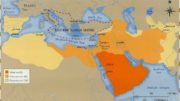
One presenter asserted that Islam’s fighting is only required in defending oneself. They failed to mention in Islam’s first 100 years it defended itself all the way from the Arabian Peninsula into southern France in the west and as far east as modern Pakistan and India. In those one hundred years it conquered as much territory as was held by the Roman Empire at the height of its power—only it took Rome four or five centuries to accumulate that much land. The same presenter also failed to mention it happened again under the Ottoman Empire where Islam twice fought its way to the gates of Vienna as late as the seventeenth century. Their statements in this regard are simply intellectually dishonest, but acceptable in our society today if you hold the “right values”. They are also sanctioned within Islam. A concept called taqiyya which allows the use of deception or deceit in order to achieve the greater goal of furthering Islam. Again, an example of placing expediency over morality.
Myth: American-Muslim Views Reflect Islam In the Rest of the World
The film focused on American-Muslim beliefs, but do those beliefs reflect those of the other 1.6 billion Muslims in the world today? First, they cite most Muslims believes other faiths also lead to salvation, but survey information from the Pew Research Center indicates most of Islam’s followers outside the U.S. believe that Islam alone leads to salvation—about 1.3 billion out of 1.6. I will repost these survey related articles later in this series. Second, the film stated survey results of American-Muslims supported the position that most followers of Islam condemn attacks on civilians. From the same Pew Research surveys noted above, about 500 million of its 1.6 billion followers view Hezbollah and Hamas favorably, and about 250 million believe that suicide bombings are either often or sometimes justified.
Myth: Islam is a Religion of Peace
This same film stated extremists kill more Muslims today than non-Muslims, and ask why non-Muslims consider Muslims perpetrators and not victims. Estimates put the non-Islamic death toll from the spread of Islam at as many as 280 million since the seventh century. These figures include Christians, Jews, Zoroastrians, Nestorians, Buddhists, Hindus, gnostics, and pagans—averaging about 200,000 per year for almost 1,400 years. The number of Christian deaths alone at the hands of Islam over the last decade (in 2017) has varied between 35,000 to over 100,000 per year. The film is correct that the figures just mentioned do not contain the death toll of Muslims in the spread of Islam including Sunni, Shia, Mamluks, Fatimid, Druze, Alawite, Safavid, Ottoman and many others. Muslims too are victims, but are they victims of extremists or victims of Islam’s very tenets—its ideology?
This comes down to the meaning of the word peace. Augustine wrote that man does not wage peace to make war, but rather wages war to make peace—a peace that is more to his own choosing. War ensues when man turns away from God. When man turns toward himself he ceases to obey God’s law to love Him and his fellow man—His creation. Within Christianity peace is to be man’s normal state as he is turned toward God. [11] Within Islam, conflict is the normal state and peace the interlude between conflict. Peace occurs with submission after conflict. Conflict remains until all is Islam. This difference has its roots in Islam’s ideology, Arab culture, and the Arabian Peninsula’s environment.[12]
Myth: Women Have Equality Within Islam
The women in the video and on the event’s panel said that the restrictions we hear about women within Islam did not apply to them. Easy to say in the U.S. In places like Saudi Arabia or Iran, tradition would require; they wear traditional dress, only allowed out of their house with a male family escort, unable to drive, their statements in court only carry half the weight of a man’s testimony, and possibly forced to marry as a child if their father wished, etc. Many Muslims in the U.S. have left behind, for now, the more restrictive cultures existing within their Islamic homelands, or are descendants of those who left.
Women within Islam are property. A male owns them, either someone in their family or their husband. Al-Ghazali, one of Islam’s most prominent clerics, wrote the following concerning marriage in the eleventh century.
“Marriage is a form of slavery. The woman is man’s slave, and her duty therefore is absolute obedience to the husband in all that he asks of her person. A woman, who at the moment of death enjoys the full approval of her husband, will find her place in paradise.”[13]
Where is the feminist outrage at such a position? I forgot. They focus on the “white male domination of Christianity” as they are the reason for our fear of Muslims. It has nothing to do with the ideas just mentioned. Such a delusion leads to being the kind of useful idiot that Lenin referred to during the Russian revolution. We are each free to make our own choices, but we are also accountable for them. Therefore we should make those choices in the full light of truth, rather than embracing delusion.
Myth: Extremists Constitute About 1% of Islam’s Followers
The media and Obama administration reported extremists make up only about 1% of the world’s 1.6 billion Islamic population. If true, the total number of Islamic extremists world-wide would be about 16 million people. In 2017, estimates of the U.S. Islamic population were about 7 million, about .5% of the world’s total Islamic population. Based upon the differences noted above between American-Muslim attitudes and those in the rest of the world, maybe that 1% of Islamic extremists are not those living outside of the U.S., but instead more likely those currently living within it.
Footnotes:
[1] Wolf, Dan, COEXIST; Virginia Christian Alliance, 2017.
[2] Chesterton, C.K. pp. 219-20, Orthodoxy, Bradford and Dickens, 1908.
[3] Qutb, Sayyid, Milestones, p. 3, SIME ePublishing, 2005
[4] Ibid, p. 89.
[5] ‘But you are a chosen race, a royal priesthood, a holy nation, a people for God’s own possession, so that you may proclaim the excellencies of Him who has called you out of darkness into His marvelous light, for you once were not a people, but now you are the people of God; you had not received mercy, but now you have received mercy.’
[6] Wolf, Dan, Islamic Borrowings and the Arabic People, Virginia Christian Alliance, https://vachristian.org/islamic-borrowings-and-the-arabic-people/ , March 12, 2026.
[7] Goldziher, Ignaz, Introduction to Islamic Theology and Law, p. 51, Princeton University Press, 1981.
[8] al-Misri, Ahmad ibn Naqib, Reliance of the Traveller: A Classic Manual of Islamic Sacred Law, amana publishing. Copies are available in many bookstores or on-line at sites such as http://www.actmemphis.org/Reliance-of-the-Traveller2_complete.pdf.
[9] Wolf, Dan, A Choice of Freedom, Virginia Christian Alliance, https://vachristian.org/a-choice-of-freedom/ , June 18, 2026.
[10] Pickthall, M.M., The Meaning of the Glorious Qur’an, amana publishing, 1999.
[11] Schaff, Philip, p.286, Nicene and Post-Nicene Fathers, Vol. 2, Augustine: City of God, Christian Doctrine, Wm. B. Eerdmans Publishing Company, 1989. Book XV, Chapter 4.
[12] Wolf, Dan, A War for God, pp. 28-9, living rightly publications, 2017.
[13] As cited in Darwish, Nonie, Cruel and Usual Punishment, p.40, Thomas Nelson, 2008.