The Pain Is Already Upon Us
By J. Jeff Toler for Shenandoah Christian Alliance j.toler@sca4christ.org
- “So speak and so act as those who are to be judged under the law of liberty.” — James 2:12
Until recent times, most people assumed that certain governing principles of human life belonged to a kind of universal moral inheritance. Societies differed, of course, and within broad limits people were free to deliberate about the best way to order life together—as democratic government especially encourages. But even where legislatures enacted positive law, they did so upon assumptions thought too obvious to require defense. Some things were simply understood before debate even began.
Marriage offers an obvious example. It was commonly accepted that marriage joined persons of different sexes. That understanding might be supported by an appeal to the law of God, but even apart from explicit theology it rested upon what earlier generations called nature—the natural order of things. Philosophers, jurists, and theologians gave formal expression to this conviction through what came to be known as natural law.
But what once stood beyond dispute now requires constant and continual defense.
What happens when what once required no explanation now demands constant justification? What are we to make of a moral vocabulary that for centuries shaped civilization, yet now sounds foreign, even suspect, to educated ears? The phrase natural law is often mentioned today only to be dismissed, as though it belongs to an intellectual world modernity has left behind. Yet that raises a more serious question: how did an idea once regarded as indispensable to moral reasoning and civic order recede so far from public understanding?
The intention here is not to present a full doctrinal account of natural law, but to clear away some of the obstacles that prevent thoughtful people from considering it seriously in the first place.
Human Nature and Freedom
Modern civic life rests heavily on legal arrangements—literature certainly, but more importantly documents, declarations, and constitutions that emerged through long intellectual development and were influenced by philosophers down through the ages, beginning with the ancient Greeks.
Yet natural law now receives little respect. It is not merely because the term has fallen out of fashion. It is because the reigning philosophical temper has declared it inadmissible—both intellectually and morally—on the grounds that it is thought to stand in conflict with human freedom. How often do we hear freedom tossed around as if it alone were the arbiter of personal fulfillment?
Most people will spend little time debating the laws of nature, which is another way of speaking of natural law. That is left to our cultural and political influencers, such as they are, bolstered by commentators and critics.

Pierre Manent
Pierre Manent argues that natural law was never a denial of freedom, but rather its proper orientation.
Natural law does not dictate outcomes mechanically, but gives direction to human action, a vis directiva—or directing force—the concept in classical legal philosophy, particularly in the thought of Thomas Aquinas, referring to the moral authority and guidance a law provides. This is what reason and prudence must complete. Against the modern belief that freedom means absolute self-creation, Manent shows that natural law presupposes choice, deliberation, and judgment. It affirms that human goods arise from guiding our natural inclinations toward their best expression, not from severing law from nature altogether.
Now picture how closely this aligns with the directives on liberty and freedom presented in Scripture.
- “But the one who looks into the perfect law, the law of liberty, and perseveres, being no hearer who forgets but a doer who acts, he will be blessed in his doing.” — James 1:25
According to the dominant modern view, speaking of natural law already sounds like a contradiction in terms. If human nature itself supplies a moral law, many will ask: what then becomes of human freedom? If our nature already carries meaning, direction, or limits, doesn’t that restrict our ability to define who we are?
The deeper objection goes even further. Modern thought increasingly resists the very idea that man possesses a fixed nature at all. Human beings, it is said, are not primarily creatures shaped by nature, but beings defined by freedom—indeed, by freedom in its purest sense.
This is not freedom in the older Christian or classical sense: not simply free will, or the human capacity for reflective choice within an ordered moral framework, as Aristotle understood and Christian theology later affirmed. Instead, modern freedom is often understood as the power to detach oneself from every inherited determination—whether from nature, history, tradition, or even divine authority—and to become self-defining.
In this view, freedom means that man is most fully human when he acts as though nothing essential has been given to him. The goal is no longer to discover an order already present, but to create one. What follows is the aspiration toward a world increasingly shaped by human choice alone—a world in which meaning, identity, and even moral boundaries are treated as products of human construction rather than realities received.
This is a curious notion, far removed from the foundational assumption articulated by the Founders:
“When in the Course of human events it becomes necessary for one people to dissolve the political bands which have connected them with another, and to assume among the powers of the earth the separate and equal station to which the Laws of Nature and of Nature’s God entitle them, a decent respect to the opinions of mankind requires that they should declare the causes which impel them to the separation.”
This alone argues against the modern claim that man is not fundamentally a natural being, but a cultural one. That phrase sounds sophisticated, but beneath it lies a serious philosophical assumption: that what matters most about human life is not what we are by nature, but what we choose to become.
Pierre Manent’s central argument is that modern political thought did not simply discard moral order; it replaced the language of natural law with the newer language of human rights. Before the age of the Enlightenment, rights and duties were understood within a larger framework grounded in human nature and an objective moral order.
Our cultural elite—philosophers, educators, media pundits, all who affect the social order—have increasingly treated the individual as self-defining. Freedom takes priority over any traditional moral structure. Manent argues that while human rights remain indispensable, they become difficult to justify when detached from the natural law tradition that first gave them coherence.
It is no wonder that these same voices dismiss any law given by God as the directive force for humankind. But Thomas Jefferson and his fellow countrymen understood otherwise. Human rights are meaningless unless His law, and nature itself, are faithfully cherished and preserved.
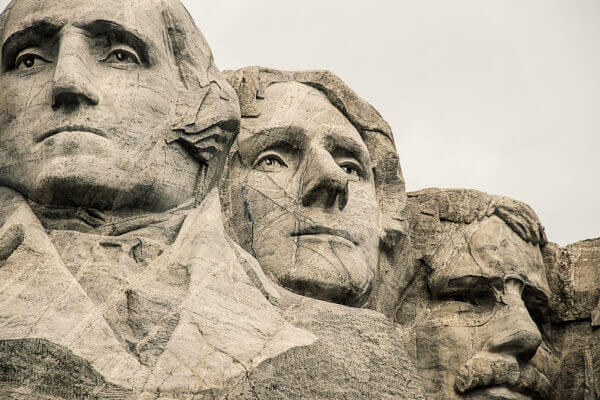
Photo by John Bakator on Unsplash