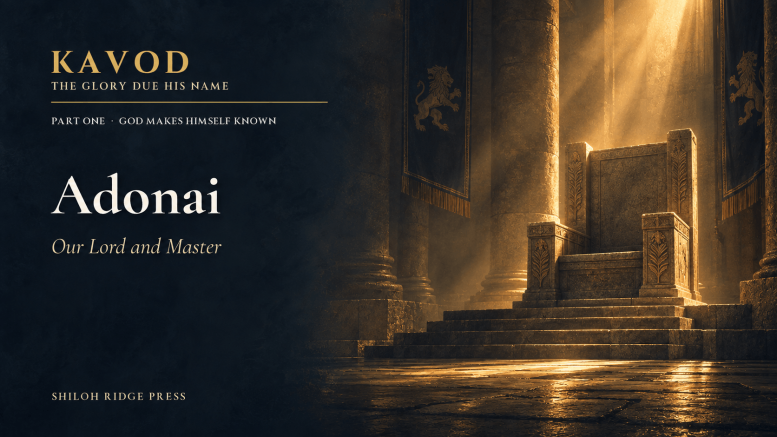
KAVOD SERIES · PART ONE · ARTICLE 5 OF 6
THE GLORY DUE HIS NAME · GOD MAKES HIMSELF KNOWN
This is Article 5 of 6 in Part One of KAVOD: The Glory Due His Name, a four-part journey through the names, titles, character, and self-revelation of God. Article 1: Hallowed Be Thy Name: Why the Names of God Matter serves as the cornerstone. Part One considers how God makes Himself known; the later parts will examine the character His names reveal, His fullest revelation in Jesus Christ, and the Holy Spirit’s work in those who bear His name faithfully before the world.
In our previous article, Elohim: The Mighty Creator, we began where Scripture begins: with the God who created the heavens and the earth. Everything exists because He willed it. Everything depends upon His power. Everything belongs to Him.
That truth carries us to the next step in our KAVOD journey.
If God is our Creator, then He is not merely someone to admire from a distance. He possesses the rightful authority to direct the lives He has made. The God who gives life has the right to govern life.
He is Adonai: our Lord and Master.
What Adonai Means
The Hebrew word Adonai is related to adon, meaning lord, master, or owner. When used of God, it expresses His sovereign authority and His rightful claim upon those who belong to Him.
Adonai is not the personal covenant name YHWH. It is a title that acknowledges who God is in relation to us. He is the Lord. We are His servants. He commands, and we are called to obey.
This distinction can be seen in the way many English Bibles print the words. LORD in small capital letters ordinarily represents the covenant name YHWH. Lord, with only the first letter capitalized, commonly represents Adonai or another form of the Hebrew word for lord.
That difference becomes especially important in Genesis 15.
Abram Addresses the Lord GOD
Genesis 15 opens with God speaking to Abram:
“After these things the word of the LORD came unto Abram in a vision, saying, Fear not, Abram: I am thy shield, and thy exceeding great reward.” Genesis 15:1
Abram answered:
“And Abram said, Lord GOD, what wilt thou give me, seeing I go childless, and the steward of my house is this Eliezer of Damascus?” Genesis 15:2
The expression translated “Lord GOD” is Adonai YHWH. Abram is addressing the covenant God while acknowledging Him as his sovereign Lord.
Abram had received a promise from God, but he could not yet see how that promise would be fulfilled. He remained childless. From his human perspective, the future God had promised seemed impossible.
Yet Abram did not approach God as an equal negotiating terms. He approached Him as Adonai.
He brought his honest question before the Lord who possessed the authority, wisdom, and power to answer it.
Biblical submission does not require pretending that we have no questions. Abram spoke plainly about his concern. But he brought that concern to the One he recognized as Lord.
Faith does not deny the difficulty. Faith carries the difficulty to Adonai.
The Master Who Protects
God’s lordship is not the rule of a cruel or self-serving master. Before Abram ever called Him Adonai, God declared:
“Fear not, Abram: I am thy shield, and thy exceeding great reward.”
The One who possessed authority over Abram also promised to protect him.
God’s ownership can never be separated from His character. He is holy, wise, good, faithful, and just. His commands are not arbitrary. His authority is not corrupted by selfishness. He never abuses those who belong to Him.
Human authority may be distorted by pride, weakness, ignorance, or sin. The lordship of God is perfect because God Himself is perfect.
Adonai does not merely issue commands from a distance. He guards His people, speaks His promises, hears their questions, and remains faithful to His covenant.
Abram did not yet understand how God would fulfill His promise, but he knew who had made it.
The Lord Who Keeps Covenant
God brought Abram outside and directed his attention toward the heavens:
“Look now toward heaven, and tell the stars, if thou be able to number them: and he said unto him, So shall thy seed be.” Genesis 15:5
We would appreciate your donation.
The God who created the stars used them to confirm His promise.
Abram’s circumstances had not changed. He still had no son. The fulfillment had not yet appeared. But the word of Adonai was enough.
Scripture then gives us one of the foundational declarations of biblical faith:
“And he believed in the LORD; and he counted it to him for righteousness.” Genesis 15:6
Abram was not counted righteous because he had solved the problem, earned the promise, or performed enough religious works. He believed the LORD.
Grace came before demand. God spoke. God promised. Abram believed.
Our obedience never places God in our debt. We do not obey so that God will become obligated to us. We obey because He is Lord, because His promises are trustworthy, and because His grace has already called us to Himself.
“O LORD Our Lord”
Psalm 8 begins and ends with the same declaration:
“O LORD our Lord, how excellent is thy name in all the earth!” Psalm 8:1, 9
The first word, LORD, represents YHWH, God’s covenant name. The words our Lord translate adonenu, a form related to adon, meaning “our Master” or “our Lord.”
Psalm 8 is therefore addressing the covenant God as the rightful Lord of His people.
The psalmist looks upon the heavens, the moon, and the stars and marvels that the God who made them would take thought of mankind. Human beings are small when measured against the vastness of creation, yet God has crowned humanity with glory and honor and entrusted us with responsibility within His world.
That responsibility is stewardship, not ownership.
Stewardship begins with ownership. God entrusts because God owns.
Our bodies, abilities, opportunities, possessions, families, work, and days have been placed into our care, but they ultimately belong to Him. We are not independent owners. We are accountable stewards serving Adonai.
The Lord Has the Right to Command
Modern life encourages us to view personal freedom as the right to define ourselves, direct ourselves, and answer to no authority beyond ourselves.
Scripture begins somewhere else.
We did not create ourselves. We do not sustain ourselves. We cannot add one moment to our lives apart from the will of God. Every breath bears witness that we are dependent creatures.
If God is Adonai, there can be no private corner of life over which He has no rightful claim.
He is Lord over our worship and our work.
He is Lord over our speech and our thoughts.
He is Lord over our bodies, our possessions, our relationships, and our plans.
He is Lord when His commands agree with our desires, and He remains Lord when obedience is costly.
Calling God “Lord” while reserving the right to disregard His Word empties the title of its meaning. The proper response to Adonai is not merely admiration. It is surrender.
We Are Not Our Own
The New Testament applies this truth directly to those who belong to Jesus Christ:
“What? know ye not that your body is the temple of the Holy Ghost which is in you, which ye have of God, and ye are not your own? For ye are bought with a price: therefore glorify God in your body, and in your spirit, which are God’s.” 1 Corinthians 6:19-20
The Christian belongs to God by creation and by redemption.
We were made by Him, and in Christ we have been purchased at immeasurable cost. The blood of Jesus Christ has redeemed us from sin and brought us under His gracious lordship.
This does not diminish human dignity. It establishes it.
Our lives possess meaning because they belong to God. Our bodies matter because they belong to God. Our daily choices matter because they are made before God. Even ordinary acts of faithfulness become acts of worship when they are offered to Adonai.
The Christian life is not an attempt to fit God into plans we have already made. It is the willing surrender of our plans, desires, and direction to the Lord who owns us and loves us.
Adonai Revealed in Jesus Christ
The lordship of God comes into its fullest New Testament light in Jesus Christ.
Jesus told His disciples:
“Ye call me Master and Lord: and ye say well; for so I am.” John 13:13
Jesus did not correct them for calling Him Lord. He affirmed that they were right.
Yet the Lord and Master knelt to wash His disciples’ feet.
Divine lordship is not selfish domination. In Jesus Christ, we see authority joined perfectly with holiness, humility, love, and sacrificial service. The Master served His servants and then gave His life for them.
After His death and resurrection, Scripture declares:
“And that every tongue should confess that Jesus Christ is Lord, to the glory of God the Father.” Philippians 2:11
We do not make Jesus Lord by confessing Him. He is Lord. Our confession acknowledges the reality that God has revealed.
The Father is Lord. The Son is Lord. The Holy Spirit is Lord. Yet there are not three gods, but one God: Father, Son, and Holy Spirit.
To know God as Adonai is therefore not merely to adopt a religious title. It is to bow before the triune God who created us, redeemed us, and rightfully commands our whole lives.
Because This Is Who God Is…
Because God is Adonai, everything we possess must be received as a trust from His hand.
Because God is Adonai, His Word carries authority even when obedience is difficult.
Because God is Adonai, we can bring Him our questions without treating Him as our equal.
Because God is Adonai, His commands can be trusted because His character is holy, wise, good, and faithful.
Because God is Adonai, surrender is not the loss of our purpose. It is the recovery of the purpose for which we were made.
Because Jesus Christ is Lord, no part of the Christian life can be separated from His rightful rule.
Our time belongs to Him. Our work belongs to Him. Our bodies belong to Him. Our future belongs to Him.
And the Lord who commands us is also the Lord who says, “Fear not.”
Prayer
Adonai, our Lord and Master, You created us, sustain us, protect us, and call us Your own. Forgive us for speaking of Your lordship while reserving portions of our lives for ourselves. Teach us to trust Your wisdom, submit to Your Word, and receive every possession and opportunity as a stewardship from Your hand. When we cannot see how Your promises will be fulfilled, help us to believe You as Abram believed. We praise You for Jesus Christ, our Master and Lord, who humbled Himself to serve and gave His life to redeem us. By Your Holy Spirit, bring every part of our lives under Your gracious rule so that our worship, obedience, and service may give You the glory due Your name. Amen.
Elohim is the mighty Creator, and Adonai is our rightful Lord and Master. But readers of English Bibles often encounter two forms of God’s covenant name: Yahweh and Jehovah. In Article 6: Yahweh or Jehovah? Understanding the Difference, we will consider how those forms developed and what they mean as we seek to honor the name God revealed.
Scripture to Carry With You
“And Abram said, Lord GOD, what wilt thou give me, seeing I go childless, and the steward of my house is this Eliezer of Damascus?” Genesis 15:2
“O LORD our Lord, how excellent is thy name in all the earth!” Psalm 8:1, 9
“Ye call me Master and Lord: and ye say well; for so I am.” John 13:13
What Is KAVOD?
Kavod is the Hebrew word commonly translated glory, honor, or majesty. It carries the sense of weightiness and worth. When Scripture speaks of the kavod of God, it directs us to the overwhelming greatness, holiness, beauty, and splendor of who He is.
To give God glory is not to add something He lacks, but to recognize, proclaim, and live in the light of the glory that is already His.
“Give unto the LORD the glory due unto his name.” —Psalm 96:8, KJV
© 2026 Shiloh Ridge Press, LLC. Published by the Virginia Christian Alliance with permission. Scripture quotations are from the King James Version unless otherwise noted. Cross-posting is permitted when this article is reproduced in full and unaltered, with attribution and a link to the original publication.