
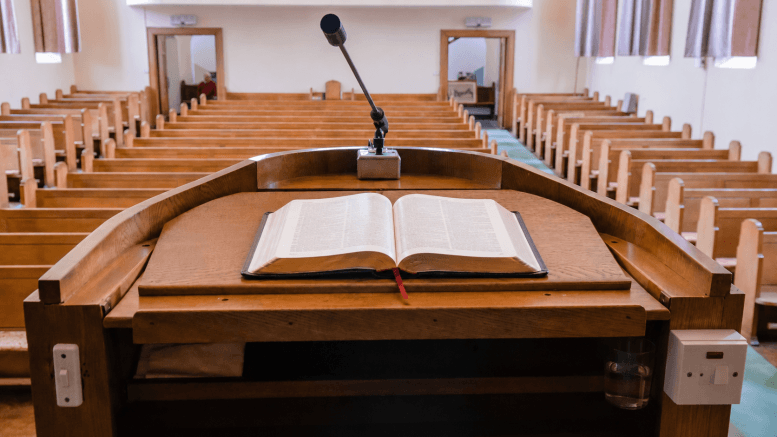
We Were Told to Sit Out. The Founders Never Did.
Somewhere along the way, churchgoers and pastors were handed a quiet rule: you don’t talk about politics in church. It sounds like wisdom — like guarding the sanctuary and keeping the peace. But it may be one of the most effective lies ever told to the American church. While we kept quiet to keep the peace, the ground shifted under our feet.
And now the bill is coming due. Here in Virginia, on November 3, we will vote on constitutional amendments that do not merely adjust a policy — they rewrite our Commonwealth’s Bill of Rights, and once written in, they are meant to be permanent. Two of them strike at God’s created order itself: one would erase marriage as the union of one man and one woman; the other would write a sweeping right to abortion into the constitution, set behind a standard so high that few real limits could survive it. If Christians do not vote — and if pastors do not speak plainly from the pulpit, both to move their people and to teach them what these amendments actually do — then the walls God built will be voted down by the very people He set to guard them.
So how did we ever come to believe the pulpit must fall silent on the questions Scripture speaks to most? A talk I watched this week from historian David Barton answers that — and I have not been able to shake it, because it shows a church that once knew better.
The Half-Story We Believed
You know the version taught in most classrooms: the founders were deists and skeptics, the nation was born secular, and faith is a private thing best kept out of public life. Set that beside the record. In his Farewell Address, George Washington called religion and morality the “indispensable supports” of political prosperity, and warned against any man who would labor to subvert “these great pillars of human happiness.” John Adams wrote that “our Constitution was made only for a moral and religious people” and is “wholly inadequate to the government of any other.” Those are not men asking the church to sit down and be silent.
How did we forget it? Not by conspiracy so much as neglect — textbooks that trimmed the record, a slogan about “separation” stretched far past anything the founders meant, and a church content to let others tell its story. Barton makes a point I cannot argue with: in Scripture, revival often began when a people recovered a record they had lost. Josiah’s reformation started when a forgotten scroll was found in the temple and read aloud.
Watch It — Then Pass It On
In this talk, Barton walks through the signers of the Declaration one by one — their training, their Bibles, the prayer proclamations they issued as governors — and lays the documents on the table. Watch it. Weigh it with an open Bible and a careful mind, the way you would test any teacher. Then send it to your pastor, your elders, the believer in your small group who is sure that faith and citizenship belong in separate rooms.
Take Your Stand
So hear this as a plea to get back in the game — pastors first, because the trumpet is yours to sound, and then every believer who will stand. Not to trade the gospel for a party. Not to baptize a candidate. Only to carry the truth we already hold into the public square God never told us to abandon. The sidelines will not stay neutral; someone always fills the space we leave empty. Register. Vote. Speak. And bear the discomfort of it, as Paul charged Timothy, “as a good soldier of Christ Jesus.”
And if the word politics is the very thing that makes you flinch, please read our Editorial Board’s companion piece, The Word the Enemy Stole — on why the most political book in history is the one already on your shelf: your Bible.
The founders were not giants we cannot match. They were ordinary men who refused to sit out their moment — and ours is no smaller. The same God who raised them up can wake His church again; He has never once lost a battle in the history of the world. No video and no article ever changed a human heart — only the Spirit of God does that. But He often begins by helping a forgetful people remember who they are. Watch. Remember. Then take your stand.
Scripture quotation is from the English Standard Version (ESV).

“Great minds run together” brother Jeff!! https://shut-upn-sing.com/2026/07/05/the-sunday-morning-tune-up-prayerfully-and-bravely-stand/