Iran’s regime reportedly killed tens of thousands of citizens in a 48-hour massacre.
Internet blackouts hide the horror. Trump weighs military options. Israel braces for retaliation.
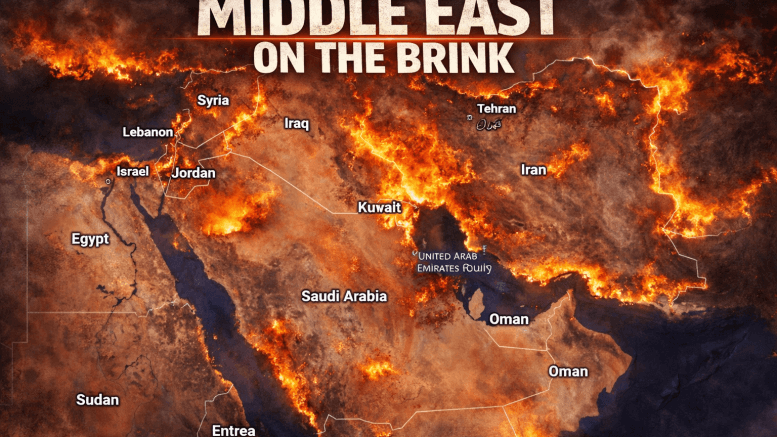
The Middle East stands on the brink of a crisis that could reshape the entire region. From Iran to Jerusalem, tensions are escalating at a pace not seen in a generation. While the world watches, a humanitarian catastrophe is unfolding in Iran—one that may be the largest massacre since the regime’s brutal crackdown decades ago.
Between January 8th and 9th, the Iranian regime allegedly slaughtered tens of thousands of its own citizens during a 48-hour rampage against protesters. Conservative estimates place the death toll at 43,000, though some reports suggest the number could reach 60,000 to 80,000. The regime itself admits to 30,000 deaths. Yet despite the scale of this atrocity, the world has seen only fragments of the horror—thanks to an internet blackout that has lasted over 400 hours.
What we do know paints a picture of unimaginable evil. Videos smuggling out of Iran show hospitals overflowing with body bags, parents desperately searching for their children, and citizens fleeing to the mountains or the sea to escape regime soldiers. Reports describe troops raiding homes and executing civilians, then refusing to release bodies unless families pay exorbitant fees. One doctor calls it “a genocide in digital darkness.”
🎥 Watch CBN News Report: Middle East on the Brink
CBN News correspondent reports from Jerusalem on the unfolding crisis, President Trump’s military options, and what this means for Israel and the region.
Video courtesy of CBN News
Protests in 400 Cities—and a Regime in Panic
The scale of Iran’s uprising is unprecedented. Protests have erupted in over 400 towns and cities across the Islamic Republic, with demonstrators demanding freedom from the tyrannical regime that has imposed its brand of Shia Islam on the population for decades.
Consequently, the regime is responding with maximum brutality. Soldiers are using military-grade weapons against unarmed civilians. Prisoners are reportedly being injected with high levels of potassium—a method designed to cause death two or three days after release, making the murders harder to trace. Families are being forced to watch their loved ones disappear into a system designed to eliminate dissent.
Moreover, the targets tell a story. Many protesters are attacking mosques—not out of hatred for faith, but because the regime has turned these religious sites into headquarters for the Iranian Revolutionary Guard Corps (IRGC). The people of Iran are rejecting the theocratic dictatorship that has ruled them since 1979.
Trump’s Military Options: Strike or Blockade?
As the USS Abraham Lincoln arrives in the region after more than a week of delays, President Trump faces a critical decision. The United States now has the military capability to strike the Iranian regime directly. However, a new option is also on the table: a naval blockade.
A naval blockade would be considered a casus belli—a cause for war—but could economically paralyze the regime without firing a shot. Meanwhile, U.S. Secretary of State Scott Benson reports that regime leaders are wiring tens of millions of dollars out of the country, suggesting they may be preparing to flee.
Furthermore, Admiral Brad Cooper is coordinating with Israeli Defense Forces Chief of Staff Zamir to prepare for Iran’s inevitable retaliation. If the U.S. strikes, Iran is expected to respond not against American forces, but against Israel—just as it did twice before, launching hundreds of ballistic missiles, UAVs, and drones.
Israel Braces for Retaliation
Major airlines have already cancelled flights in and out of Israel, citing the “sensitive period” as the region holds its breath. If President Trump orders a military strike on Iran, Israel will likely face another barrage of missiles. Thankfully, the UAE, UK, and Jordan have pledged to help intercept incoming threats.
Additionally, Israel is conducting a massive operation in Gaza to recover the body of Ron Gavili, the last hostage from the October 7th attacks. The recovery would bring closure to families and the nation after one of the darkest chapters in Israeli history.
Northeast Syria: A Bright Spot Under Threat
While the world focuses on Iran, another crisis is unfolding in northeast Syria. The city of Kobani—famous for its heroic stand against ISIS years ago—is now under siege by the Syrian regime of al-Sharah (also known as al-Golani).
This region represents one of the few democratic bright spots in the Middle East. In fact, there’s a church in Kobani where Muslim-background believers worship freely—a testament to the religious liberty that existed before the current Syrian army, composed largely of jihadists, began its assault.
Similarly, the release of ISIS prisoners from Syrian jails threatens to reignite terrorism across the region. The bright spot of northeast Syria may be extinguished unless the international community acts.
What This Means for Prophecy and the Church
The upheaval in Iran carries profound prophetic significance. For years, Bible prophecy teachers have pointed to Persia (modern-day Iran) as a key player in end-times events, particularly in Ezekiel 38-39’s description of the Gog and Magog coalition against Israel.
However, what we’re witnessing may be the weakening or even collapse of the current Iranian regime—potentially changing the prophetic landscape. The Iranian people are rejecting Islamic theocracy and demanding freedom. Churches in the Middle East are praying for revival to sweep through Persia, just as it did in the book of Esther.
Key prophetic considerations:
- Iran’s role in Ezekiel 38-39 assumes a hostile regime
- A regime change could alter regional alliances
- The cry for freedom echoes biblical themes of liberation
- God’s sovereignty over nations remains constant (Daniel 2:21)
🙏 How to Pray
CBN’s correspondent closed his report with this prayer focus:
For Iran:
- Comfort for families who have lost loved ones
- Protection for the injured and wounded
- Medical help for those fleeing or hiding
- Freedom from the tyrannical regime
For President Trump:
- Wisdom to know how to tip the scales
- Discernment between naval blockade and military strike
- Protection for U.S. forces in the region
For Israel:
- Protection from ballistic missile retaliation
- Successful recovery of Ron Gavili’s body
- Wisdom for Prime Minister Netanyahu
For Northeast Syria:
- Protection from jihadist forces
- Preservation of religious liberty
- Containment of released ISIS prisoners
Where to Watch & Learn More
CBN News Coverage:
- Share this live feed with your friends and family:
 / cbnnewsonline
 - Like CBN on Facebook:
 / cbnnews
 - Like CBN on Twitter:
 / cbnnews
 - Follow CBN on Instagram:
 / cbnnews
Stay Informed:
- Follow CBN News for breaking updates from Jerusalem
- Check International Christian Concern for persecution reports
- Monitor Israeli news sources (Times of Israel, Jerusalem Post)