
On the morning of April 23, 2026, the Virginia Senate chamber was not at its best. Two days earlier, voters had narrowly approved a mid-decade redistricting referendum by roughly three percent, and what began as routine session business dissolved into nearly two hours of partisan speeches from the floor.
The full session is available on YouTube at https://www.youtube.com/watch?v=6aeDRSb8PBU. Timestamps throughout this article let readers hear the senators for themselves.
A chamber should be a place of respect, regardless of disagreement. Senators will differ on policy. That is the nature of the institution. But there is a way to disagree that honors the office, the chamber, and the people being addressed — and there is a way that does not.
Three senators, on that morning, illustrated the difference.
 Senator Surovell Chose Contempt
At the 1:05:41 mark, Senate Majority Leader Scott Surovell (D-Mount Vernon, 34th District) rose for a point of personal privilege. For ten minutes, he repeatedly attacked the sitting President of the United States, referring to him as “that man across the river” and “this guy.” He accused Republican-governed states of rigging democracy. He listed what he called seven offenses, suggesting the only “rigging” of American elections in the last six years had come from the White House.
Readers can judge the tone themselves at the timestamps above. A senator may strongly oppose a president’s policies. A senator may warn against perceived abuses of power. What a senator should not do, in a chamber where George Washington’s statue stands just outside the door, is substitute venom for argument. Contempt is not an argument. It is an avoidance of one.
There is an additional irony worth noting. The day before Senator Surovell delivered this speech accusing Republican-led states of rigging democracy, a Tazewell County Circuit Court judge had ruled the very referendum he was defending to be unconstitutional — a ruling Virginia Christian Alliance covered at length in “Court Blocks Virginia’s Redistricting Amendment — But the Real Threat Is What Comes Next.” A senator accusing others of rigging elections on the morning after his own side’s referendum was blocked for constitutional violations is a posture that invites, at minimum, humility.
Senator Surovell can be reached at senatorsurovell@senate.virginia.gov or at his district office at (571) 249-4484. Readers who believe the chamber deserves better are encouraged to write respectfully.
 Senator Obenshain Pushed Back Without Returning Contempt
Beginning at 1:13:48, Senator Mark Obenshain (R-Harrisonburg, 2nd District) rose to respond. His speech was sharp. He warned that the referendum had disenfranchised vast swaths of the Commonwealth. He named the disdain that rural and small-town Virginians feel when power is concentrated in a handful of urban districts. “There will be a reckoning,” he said. “It may not be today. It may not be tomorrow. If this stands, there will be a price that will be paid here in the Commonwealth of Virginia.”
Obenshain, a Presbyterian elder and a longtime member of First Presbyterian Church in Harrisonburg, did not return the contempt in kind. He did not call the governor or his Democratic colleagues names. He named a concrete wrong and warned of consequences. That is what legitimate opposition sounds like.
Then came the speech that made the morning worth remembering.
 Senator Stanley Described His Neighbors
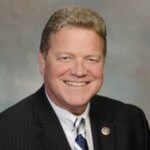
At 1:16:00, Senator Bill Stanley (R-Moneta, 7th District) rose to speak. Stanley represents Franklin County and most of Southside and Southwest Virginia — Carroll, Floyd, Franklin, Grayson, Henry, and Patrick counties, along with Galax and Martinsville. He is a Methodist. His family moved to Franklin County in 1983 after his father retired from a career as a Navy aviator, and Stanley has practiced law there since 1999.
For eleven minutes, he did something different from what the chamber had heard all morning. He did not insult anyone. He did not demonize a president. He did not relitigate the vote. Instead, he described his neighbors.
What he described, whether he intended it or not, was the visible fruit of Christian community in Virginia.
The People Stanley Described
Stanley asked his colleagues to take a drive. Leave Richmond, head southwest past Roanoke, past the New River Valley, past the last exit where the radio station stops coming in clearly. Keep going. Eventually you arrive somewhere different — different in how people live, in what they count on, in who they are.
He then introduced the chamber to specific people:
The man who sees a stranger broken down on Route 19 at seven in the morning, in the cold, in the rain, with no cell service. That man does not keep driving. He stops. He gets out. He offers jumper cables, his time, and coffee from his thermos. And if you try to pay him, he looks at you like you have insulted him.
The woman who notices her neighbor — the one going through chemotherapy, the one who just lost his wife — has not mowed his grass in three weeks. She does not file a complaint with the county. She fires up her own mower and spends her Saturday afternoon in someone else’s yard. When he thanks her, she says, “Don’t worry about it. That’s just who we are. That’s just what we do.”
The volunteer firefighters who drive forty-five minutes to a structure fire at two in the morning. No pay. No pension. They go because someone needs help and they can give it.
The teachers who buy classroom supplies with their own money, without a press release or a GoFundMe page. The farmers who work from sunrise past sunset through drought and flood and unfavorable markets, because the land has been in the family for four generations and they will not be the ones who give it up.
These were not abstractions. These were Stanley’s actual neighbors, the people he grew up with, the people he represents.
A Pattern the Bible Already Named
Stanley did not cite scripture. He did not need to. Every example he offered mapped directly to a biblical pattern that Christians have recognized for two thousand years.
“But a Samaritan, as he traveled, came where the man was; and when he saw him, he took pity on him.” — Luke 10:33
The man on Route 19 is the Good Samaritan. He stops when others would pass by. He gives what he has. He refuses payment because the giving itself is the point. Jesus told that parable to answer the question, “Who is my neighbor?” Stanley answered it the same way — by describing someone who acts like one.
The woman mowing the widower’s lawn lives out the second great commandment. “Love your neighbor as yourself,” Jesus said, and she does, without needing to be asked, without expecting recognition. The volunteer firefighters embody what Jesus called the greatest love — laying down one’s life, or at least one’s sleep and safety, for a friend.
The teachers giving from their own pockets follow the apostolic pattern: “Freely you have received; freely give.” The farmers tending land across four generations walk in the long obedience of Deuteronomy, where faithfulness is measured not in a single lifetime but across the ones that follow.
None of this is accidental. These behaviors are the civic and social fruit of communities that have, for generations, been anchored in biblical Christianity. The church shaped the character. The character shaped the community. The community shaped the way people treat strangers on the side of the road at seven in the morning.
Why the Crime Statistics Are Not a Coincidence
Stanley asked his colleagues a pointed question. Why does Southside and Southwest Virginia have less crime? Less murder? Fewer violent felonies committed against the people who live there? His answer was simple: character and integrity.
But character does not grow from soil or altitude. Character grows from what a community believes about God, about human nature, about sin, about accountability, about the dignity of the neighbor. Where the gospel has taken root across generations, the fruit is visible. Where it has been uprooted, the fruit disappears.
The differences Stanley pointed to are not a Southern thing or a rural thing. They are a downstream effect of an upstream reality. A community that still believes in final judgment, in the image of God stamped on every person, in the obligation to love one’s neighbor — that community behaves differently from one that does not. You can measure it in crime rates. You can measure it in how long a mower runs on a Saturday afternoon.
The Milky Way From the Front Porch
The most striking passage of Stanley’s speech was not about people. It was about the sky.
On a clear night in Southside and Southwest Virginia, he said, you can walk out your front door, look up, and see the entire arm of our galaxy stretched across the darkness — so thick with stars it looks like someone spilled light. City people pay thousands of dollars, even hundreds of thousands, chasing that kind of silence. For his neighbors, it is a Tuesday.
“The heavens declare the glory of God; the skies proclaim the work of his hands.” — Psalm 19:1
Stanley described general revelation without naming it. The psalmist said the heavens are preaching every night, in every language, to every ear willing to listen. Where the light pollution of modern urban life has drowned out that sermon, people pay enormous sums trying to recover it. Where the sermon still plays freely, people take it for granted — not because they do not value it, but because they have never lost it.
What Is Actually Being Lost
The subtext of Stanley’s speech was that his way of life is being legislated against by people who have never visited his district. That is true. It is worth naming. But the deeper loss is not cultural or political. It is spiritual.
When secular governance treats rural Virginia as a problem to be managed, what it is actually dismissing is the pattern of life that grows where the gospel has taken root. The stopped stranger on Route 19. The mowed lawn. The volunteer firefighter. The four-generation farm. These are not quaint. They are the visible evidence that a Christian moral imagination still shapes a community’s daily life.
The seven core issues Virginia Christian Alliance tracks — sanctity of life, biblical sexuality, our nation under God, obedience to God, creationism, godly relationships, God-ordained family — are all questions about whether God’s created order remains visible in Virginia’s public life. Rural Virginia is one of the places where that order still shows up in ordinary human behavior. That is why it is worth defending. Not for nostalgia. Not for political advantage. For God’s glory.
The Chamber, at Its Best
The lesson of April 23 reaches beyond one speech. The Virginia Senate chamber should be a place of respect, regardless of disagreement. Senators will disagree about policy. That is the nature of the institution. But how a senator speaks reveals what that senator believes about the people being addressed.
Senator Surovell chose contempt. His speech will be remembered for its venom toward a sitting president. Senator Obenshain chose firm opposition without personal attack. He warned of consequences and named a wrong, but he did not demean. Senator Stanley went further still. He did not attack. He did not defend. He simply described the people being written off, with a dignity that let the contrast speak for itself.
Christians watching from home should notice which approach bore more fruit — and which one is closer to the pattern scripture commends. “Let your conversation be always full of grace, seasoned with salt, so that you may know how to answer everyone,” Paul told the Colossians. Stanley preached a version of that instruction on the Senate floor.
A Word to Christian Readers
If you live in Southside or Southwest Virginia, the life Stanley described is the life your grandparents built and your faith community has preserved. Keep mowing the neighbor’s lawn. Keep stopping on Route 19. Keep looking up at the stars with wonder. What you are doing is not small. It is the kind of ordinary faithfulness that holds a Commonwealth together.
If you live elsewhere in Virginia, do not let this pattern of life be legislated out of existence because you never bothered to understand it or defend it. Visit. Listen. Learn the names. The people Stanley described are your neighbors too, whether you have met them or not.
Readers who wish to thank Senator Stanley for his speech can reach his office at (540) 821-3066 or at district07@senate.virginia.gov. A kind note costs nothing and encourages good men to keep speaking well. Senator Obenshain can be reached at district02@senate.virginia.gov. Both senators represent districts where Christian witness still shapes public life, and both deserve the gratitude of Christians across Virginia.
“That’s just who we are,” the woman with the mower said. “That’s just what we do.”
May it long continue to be so.