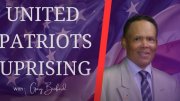
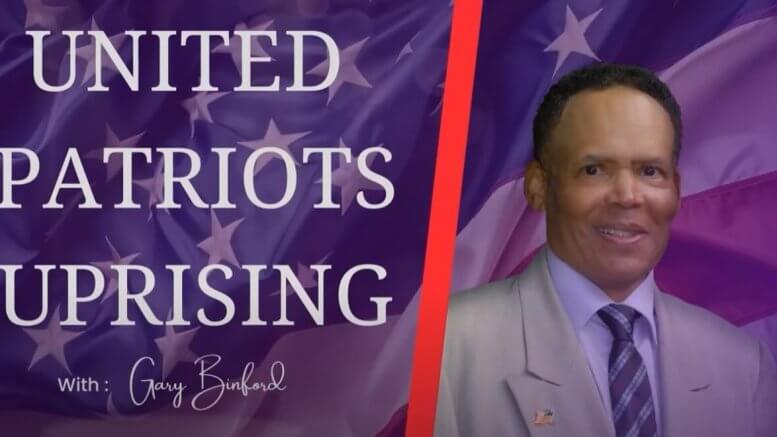
This Michael Flynn interview opens with a simple question from Gary Binford: do enough Americans understand what is at stake in the November 3 midterm elections?
Retired Army Lt. Gen. Michael Flynn does not hesitate.
No, he says. Not enough.
Flynn directed the Defense Intelligence Agency from 2012 to 2014 and served briefly as national security adviser at the start of President Trump’s first term. He has spent years warning Americans about threats to the republic.
Yet the heart of his message in this conversation is not about Washington.
It is about your county, your school board and the ballot in your hand.
Local action equals a national impact.
That is Flynn’s phrase. It may be one of the most useful things a Christian voter hears before November 3.
Watch the Full Interview
Gary Binford welcomes General Flynn back to United Patriots Uprising for his pre-midterm program. Gary posted it October 24, ten days before Election Day. The two had just appeared together at a weekend event at the America First Warehouse in Ronkonkoma, New York.
A word on how we handle this Michael Flynn interview.
The Virginia Christian Alliance does not endorse candidates or parties. Flynn and Gary speak freely, and both hold strong views about particular officials and political parties. Where they make claims about specific people, parties or contested events, those claims are theirs.
We report them as theirs, check what can be checked, and keep our focus on what every Christian citizen can do.
Are Enough Americans Paying Attention?
Flynn says he saw the problem firsthand at that weekend event.
Some people came out of support. Others came out of curiosity. The curious ones, he says, asked questions that showed they did not see the larger picture.
In Flynn’s view, that larger picture is a long-term, well-funded effort by the political left to “turn our constitution around on itself.” That is his assessment, and he states it with the conviction of a man who has said it for years.
But Flynn does not stay in the abstract for long.
That morning, he tells Gary, he voted early in Florida because he will be traveling on Election Day. Early voting in his area opened October 19. He describes the process as thorough and professional. He marked a paper ballot. Poll workers asked for his identification.
On that point, the record backs him up. Florida law requires voters to show a current photo and signature ID, whether they vote early or on Election Day. A voter without one can still cast a provisional ballot.
Flynn’s point is not that Florida is perfect.
It is that the system still belongs to the people who show up and pay attention to it.
And his answer to the awareness problem starts much closer to home than most voters expect.
Why the Michael Flynn Interview Starts at the School Board
If you do not like what you see in Washington or Richmond, Flynn says, look first at your own town.
Find the people who will push back on tax increases buried in city ordinances. Find the people who will question the next school bond issue. Local politics, he argues, is where the country can “stitch ourselves back together.”
Then he makes the case for every single vote.
A school board seat, Flynn notes, can be decided by five votes, six votes or ten. The voter who says “let somebody else do it” may be the margin.
Scripture gives that local instinct a deeper root.
“And seek the peace of the city whither I have caused you to be carried away captives, and pray unto the LORD for it: for in the peace thereof shall ye have peace.” — Jeremiah 29:7, KJV
God gave that command to exiles.
Babylon was not their home and not their choice. They had no vote, no school board and no city council seat to run for. Still, the Lord told them to seek the welfare of the city where He had placed them, and to pray for it.
If exiles owed that much to Babylon, how much more do Christian citizens owe the communities where God has planted them?
We have something the exiles never had. We have a ballot.
Jesus taught that the one who is faithful in what is least is faithful also in much (Luke 16:10). Civic faithfulness works the same way. The voter who knows his school board candidates, his county supervisors and his local ballot questions is practicing the kind of small faithfulness that national renewal is built on.
Many Christians, of course, answer that they simply do not do politics.
Flynn has an answer for them, too.
If You Pay Taxes, You Are Already in Politics
Flynn describes a conversation he has with audiences around the country.
Do you pay taxes? Yes. Do you think you pay too much? Always yes.
Then you are involved in politics, he tells them. You cannot claim to stay out of politics while government takes a share of your paycheck, your property and every gallon of gas you buy.
He gives a local example. His own county ballot included a question tied to insurance rates. That is not a distant Washington fight. It lands on a family’s monthly budget.
The apostle Paul addressed the believer’s duty to government directly:
“Render therefore to all their dues: tribute to whom tribute is due; custom to whom custom; fear to whom fear; honour to whom honour.” — Romans 13:7, KJV
Paul wrote those words to Christians living under Nero. They paid their taxes, but they had no say in how those taxes were set.
American Christians stand in a different place. Under our Constitution, the people are not only governed. Through elections, we help choose those who govern.
That means part of what we render in a constitutional republic is participation. Paying taxes and honoring authority remain our duty. Stewarding the vote is part of it, too.
This is why VCA has argued that “politics” is not a dirty word for believers. It is the ordering of our common life, and Scripture speaks to it on nearly every page.
More Than a Ballot
Flynn pushes the point further than casting a ballot.
Did you volunteer at your precinct? Did you help people at your church understand what will be on the ballot? Did you help a candidate you believe in? He says he has worked phone banks, knocked on doors and handed out flyers outside polling places himself.
His simplest suggestion may be the most practical. When a neighbor at the grocery store or gas station complains about prices, ask one question: are you voting?
Donald T. Eason made a similar appeal on this program earlier this year in The SAVE Act and the Silent Pulpit. The message bears repeating.
But for many voters, a harder question sits underneath the call to vote.
Can I trust the count?
What Flynn Says About Voting Machines and What the Record Shows
Gary raises the question directly. At the weekend event, he says, journalist Lara Logan hosted a live program on voting machines that left the audience deeply concerned.
Flynn answers carefully at first.
He says any electronic device can potentially communicate wirelessly, and he will not tell anyone that the system is perfect. In his view, problems have been proven in various states. He also says Iran, Russia, China and Venezuela have all “impacted our election systems.”
These are serious claims, and they deserve serious handling.
What the Government’s Own Reports Show
Some of Flynn’s concern has support in the government’s own reporting. In June 2026, Reuters reported on an unpublished study by the Office of the Director of National Intelligence. According to Reuters’ sources, the study describes vulnerabilities in voting machines, including outdated software and the ability of some machines to connect to the internet.
The same sources said the study does not conclude that votes were changed, and that they knew of no evidence of vote manipulation in U.S. elections. A follow-up Reuters investigation in early October reported the same pattern: investigators found vulnerabilities that can be fixed, but no evidence of hacked or altered votes.
Foreign interference is also real, but the record draws a distinction. The intelligence community’s 2021 assessment of the 2020 election found that Russia and Iran ran influence operations aimed at American voters. It also found no indication that any foreign actor tried to alter the technical side of the vote: registration, ballot casting, tabulation or the reporting of results.
Influencing what voters believe is one thing. Changing what voters cast is another. The public record documents the first. It does not establish the second.
The Paper Trail
Flynn’s own morning at the polls points to one of the strongest safeguards. He filled out a paper ballot and fed it into a scanner.
That piece of paper matters. According to the U.S. Election Assistance Commission, more than 98 percent of election jurisdictions in 2024 used voting equipment that either requires voters to mark a paper ballot or produces an auditable paper record. Paper is what audits and recounts check against the machine count.
Scripture gives a wise rule for weighing claims like these:
“He that is first in his own cause seemeth just; but his neighbour cometh and searcheth him.” — Proverbs 18:17, KJV
The first account always sounds convincing until someone examines it.
That rule cuts both ways. Christians should not wave away honest concerns about election security. Neither should we repeat claims the evidence does not yet support. Truth deserves the same scrutiny whichever side it helps.
Fight Through It
What matters most is Flynn’s conclusion.
The system has problems, he says, but that does not mean we give up on it. We fight through it, the way a soldier takes an objective. He says he has attended county election board meetings and spoken up at them.
Any citizen can do the same. Election boards hold public meetings. Localities need election officers. The work of trustworthy elections belongs to citizens, not only to officials.
Gary’s phrase for the goal is “too big to rig.” Whatever one thinks of that slogan, its premise is turnout. Every eligible citizen who votes adds weight to the result.
Flynn also raises concern about noncitizens voting. Federal law already bars noncitizens from voting in federal elections, and Flynn’s sweeping claim about states is stronger than the record shows. What the record does show is that a handful of municipalities allow noncitizens to vote in certain local races. Takoma Park, Maryland, for example, lets noncitizen residents register and vote for mayor and city council.
That is a local decision, made by local voters and local councils. Once again, the answer runs back through Flynn’s first point: local participation matters.
So why does turnout matter so much to him? Because of where he believes the alternative leads.
Complacency, Apathy and the Road to Obedience
Flynn tells Gary that a declining empire passes through recognizable stages.
First comes complacency. Then comes apathy. The last phase, he says, is “obedience or slavery,” when the people no longer tell the government what to do and the government tells the people.
He warns that the slide can happen quickly, even within a couple of years.
His sequence echoes a well-known list of the stages of civilizations, usually credited to the Scottish historian Alexander Fraser Tytler. No authenticated Tytler source for that list has been found. Its earliest documented form is a 1943 address, “The Cult of Competency,” by American businessman Henning W. Prentis Jr. Prentis moved from selfishness to apathy to dependency; later popular versions added complacency.
Whoever first put it in a list, the warning is not new.
The prophet Amos said it nearly three thousand years ago:
“Woe to them that are at ease in Zion, and trust in the mountain of Samaria…” — Amos 6:1, KJV
Israel’s leaders were comfortable. They lay on fine couches and ate well while the nation decayed around them. Amos condemned their ease as sharply as their injustice. They were, in his words, not grieved for the affliction of their own people (Amos 6:6).
That is the spiritual root of the complacency Flynn describes.
It begins in the heart before it shows up at the ballot box. A church at ease stops seeing its neighbors. A people at ease stops guarding its liberty.
Which Kind of Obedience?
One distinction is worth making here.
Christians are not against obedience. We are commanded to it, and to God first (Acts 5:29). The obedience Flynn warns against is something else: a people who have handed off self-government until they can no longer reclaim it.
Gary adds that Dr. Ben Carson told him the same thing in their recent interview. This is not politics as usual, Carson said, and it should not be treated that way. Carson’s challenge in God Gave Us a Brain. It’s Time to Use It fits here: think, learn and refuse to let anyone else do your thinking for you.
Yet the believer’s hope never rests on the next election.
God “removeth kings, and setteth up kings” (Daniel 2:21). He has not lost control of America. Our calling is faithfulness, and faithfulness does not end when the polls close.
Flynn insists on exactly that.
Voting Is the Beginning of Citizenship, Not the End
If Americans want a better government, Flynn says, they must participate in choosing it and then hold it accountable.
He believes too many people vote and then walk away. Later they complain that they never voted for the official in office, and they do nothing more.
His remedy is ordinary citizenship, practiced together. Write letters to local representatives. Organize call-in campaigns to federal officeholders. Join with neighbors, because one voice is easy to ignore and many voices are not.
He points to consumer pushback against Bud Light and Cracker Barrel as proof that coordinated citizens get results. Flynn says executives were fired. The record is more modest. After the 2023 Bud Light backlash, two Anheuser-Busch marketing executives were placed on leave. In August 2025, Cracker Barrel dropped its new logo and restored its “Old Timer” design after a week of customer backlash. “We said we would listen, and we have,” the company told its guests. Cracker Barrel later replaced its CEO, but the company has not tied her departure to the logo.
The principle holds. When ordinary people speak together, institutions listen.
One Standard for Every Candidate
Scripture also gives citizens a standard for whom to hold accountable, and how. When Jethro counseled Moses on choosing leaders for Israel, he named the qualities to look for:
“Moreover thou shalt provide out of all the people able men, such as fear God, men of truth, hating covetousness; and place such over them…” — Exodus 18:21, KJV
Able. God-fearing. Truthful. Not greedy.
That standard does not belong to one party. It applies to every candidate on every ballot. Christians should measure candidates by it before Election Day and keep measuring officeholders by it afterward.
For Virginia readers, this November’s ballot also carries three proposed amendments to the state constitution. Our earlier piece, God and Government: A Watchman’s Call Before Virginia Votes, walks through why those decisions matter to believers.
Flynn closes this part of the conversation with a realistic word.
Most people do not have a senator on speed dial. They are working hard and taking care of their families. But every one of them controls two things: whether they vote, and whether they show up.
What You Can Do Before November 3
- Vote. In Virginia, early in-person voting ends Saturday, October 31. On Election Day, Tuesday, November 3, polls are open from 6:00 a.m. to 7:00 p.m., and anyone in line by 7:00 p.m. may vote. Confirm your polling place at the Virginia Department of Elections.
- Read your whole ballot. Study the local races and the three proposed constitutional amendments, not only the races at the top.
- Ask one person. Follow Flynn’s advice and ask a neighbor, coworker or friend whether they plan to vote.
- Pray. Pray for candidates, election officers and everyone in authority, as Paul commands (1 Timothy 2:1–2).
- Use one standard. Measure every candidate by Exodus 18:21: able, God-fearing, truthful and free of greed.
- Stay involved after November 3. Attend one local meeting this winter: your school board, your board of supervisors or your local electoral board. Ask your registrar how to serve as an election officer next year.
Key Takeaways
- Local action, national impact. Five votes can decide a school board.
- Seek the peace of your city. (Jeremiah 29:7)
- If you pay taxes, you are already in politics. (Romans 13:7)
- Vulnerable is not the same as hacked. Verify before you amplify. (Proverbs 18:17)
- Complacency is how self-government is lost. (Amos 6:1)
- Voting is the beginning of citizenship, not the end.
- Measure every candidate by character, not party. (Exodus 18:21)
- Trust God above every election result. (Daniel 2:21)
Resources
- Watch the Full Interview: Lt. Gen. Michael Flynn on United Patriots Uprising
- Virginia Department of Elections: Elections.Virginia.gov
- Intelligence Community Assessment: Foreign Threats to the 2020 US Federal Elections (2021)
- U.S. Election Assistance Commission: 2024 Election Administration and Voting Survey
- Reuters: White House Delays Release of U.S. Voting Machine Study as Midterms Near
- United Patriots Uprising Archive: Radio Influence
Find Gary Binford Online
- YouTube Channel: @garybinford1969
- Podcast Archive: United Patriots Uprising
- X (Twitter): @united_gary
- Facebook: Gary Binford
- Truth Social: @GaryBinford
Find General Flynn Online
- Website: GeneralFlynn.com
Washington feels far away.
Your school board does not.
Neither does your precinct, your county ballot or the neighbor you will see at the gas station this week.
Local action. National impact.
And over every ballot and every outcome stands a sovereign God who calls His people to be faithful.
“And let us not be weary in well doing: for in due season we shall reap, if we faint not” (Galatians 6:9, KJV).
The views and opinions expressed in this article are those of the authors and do not necessarily reflect the views of the Virginia Christian Alliance.
We welcome thoughtful and respectful dialogue from all viewpoints. Comments must remain civil, relevant, and free of profanity, personal attacks, or mockery of Christian faith. Disagreement is allowed — disrespect is not.